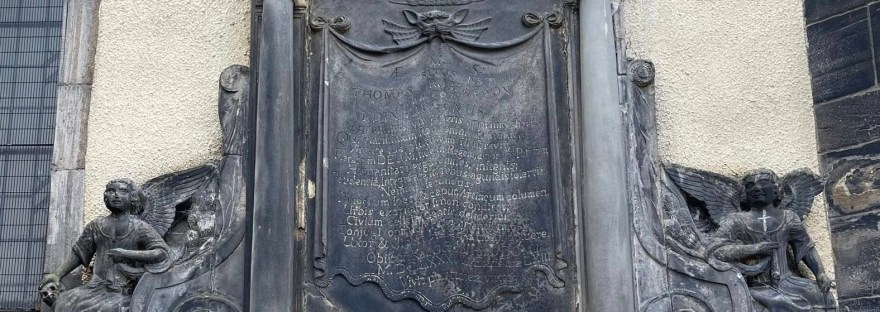
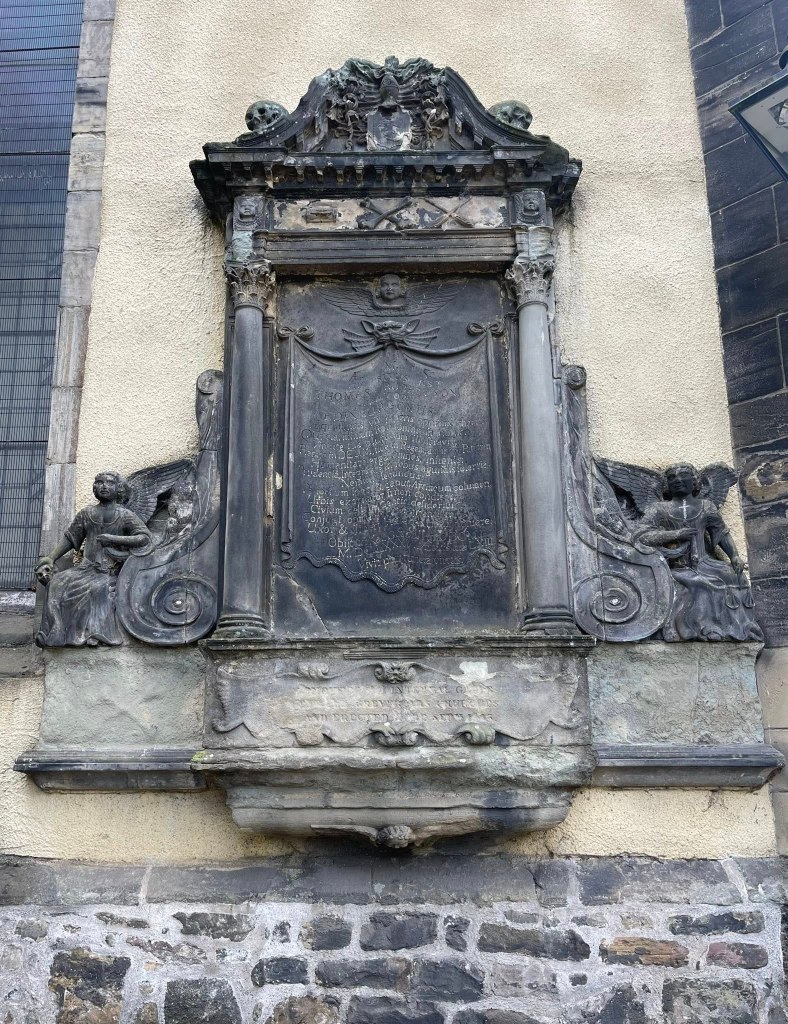
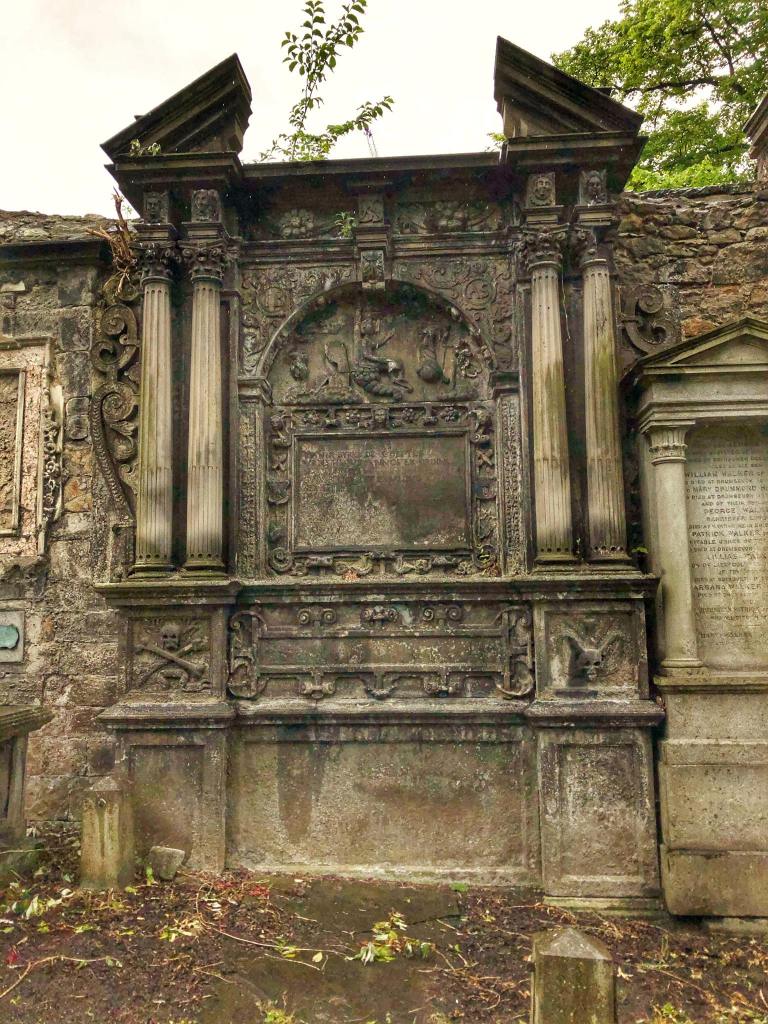
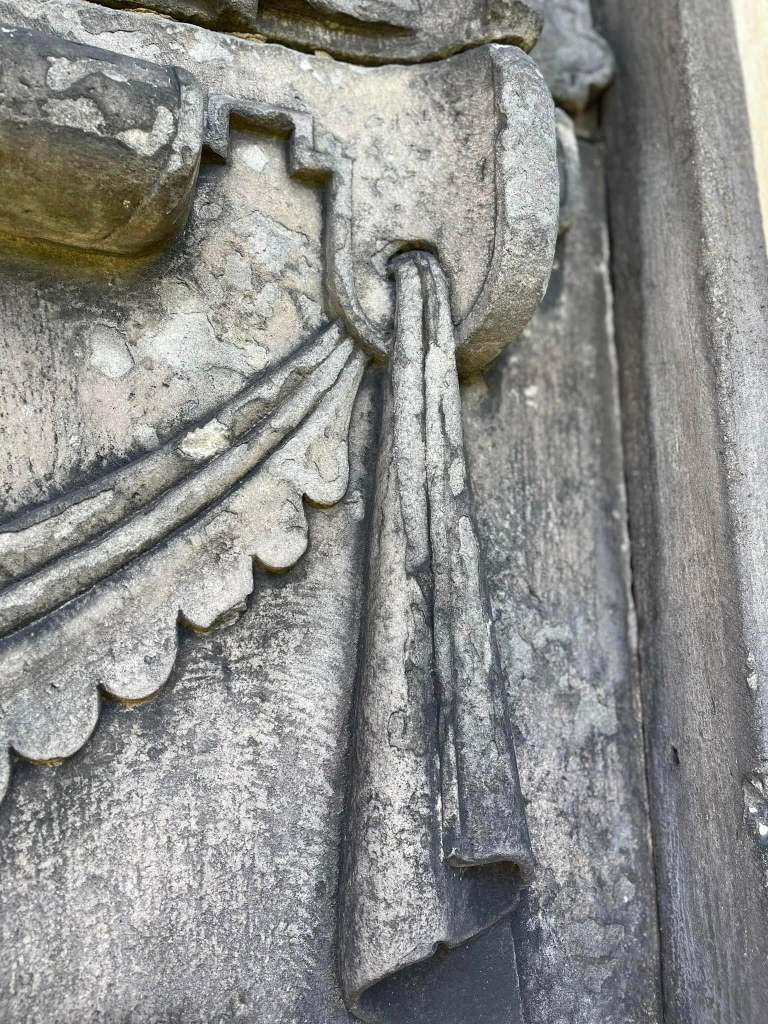
Today this memorial is mounted on the north wall of the Kirk, but it wasn’t originally in this position. When Thomas Robertson died in 1686 “his most mournful wife and children erected this monument”. The memorial was created by Robert Mylne, the most famed & skill Master Mason to the Crown. They had it affixed to the West Wall of the original (Old) Greyfriars Kirk, in a prominent position for all to admire. When the New Greyfriars Kirk was added to the west end of the old Kirk, this memorial found itself hidden from view in the internal space between the old and new structures. This space was subsequently used as the coal cellar, meaning this marvellous memorial suffered the indignity of being hidden and covered in coal dust. When the dividing walls between the Old & New Kirk were finally removed in the 20th century, this monument was liberated and mounted in its current position where everyone can see it again. The inscription ends with the motto “Virtue survives the Grave”. Perhaps a footnote might be added saying “This Monument survived the Coal Cellar”.
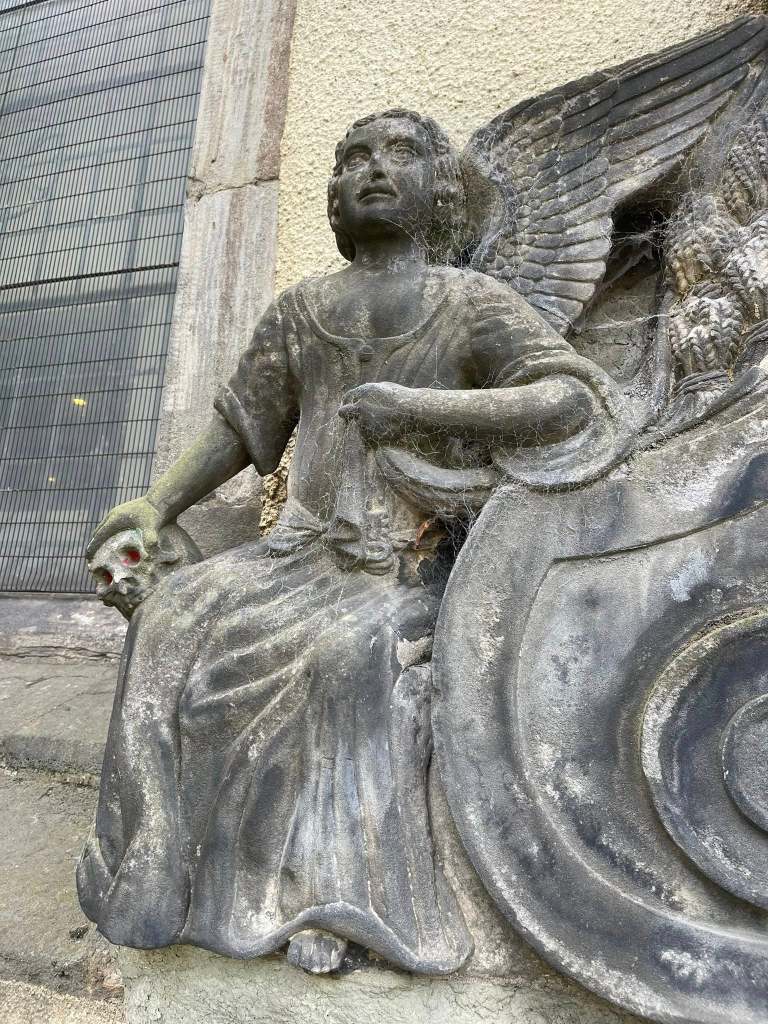
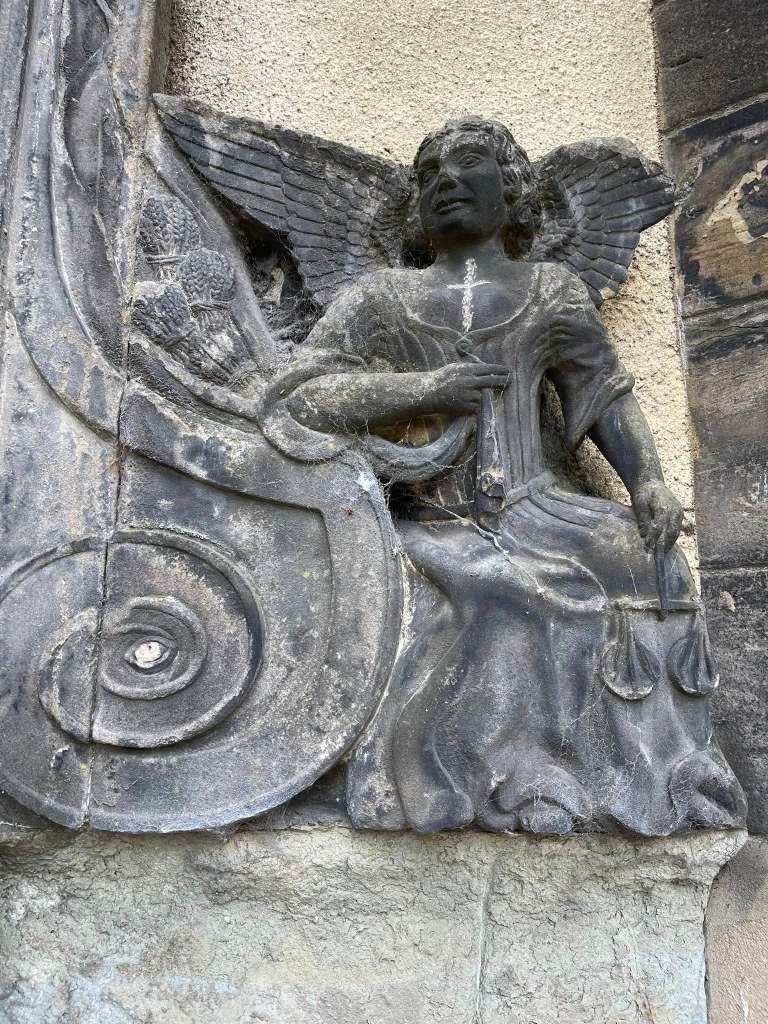
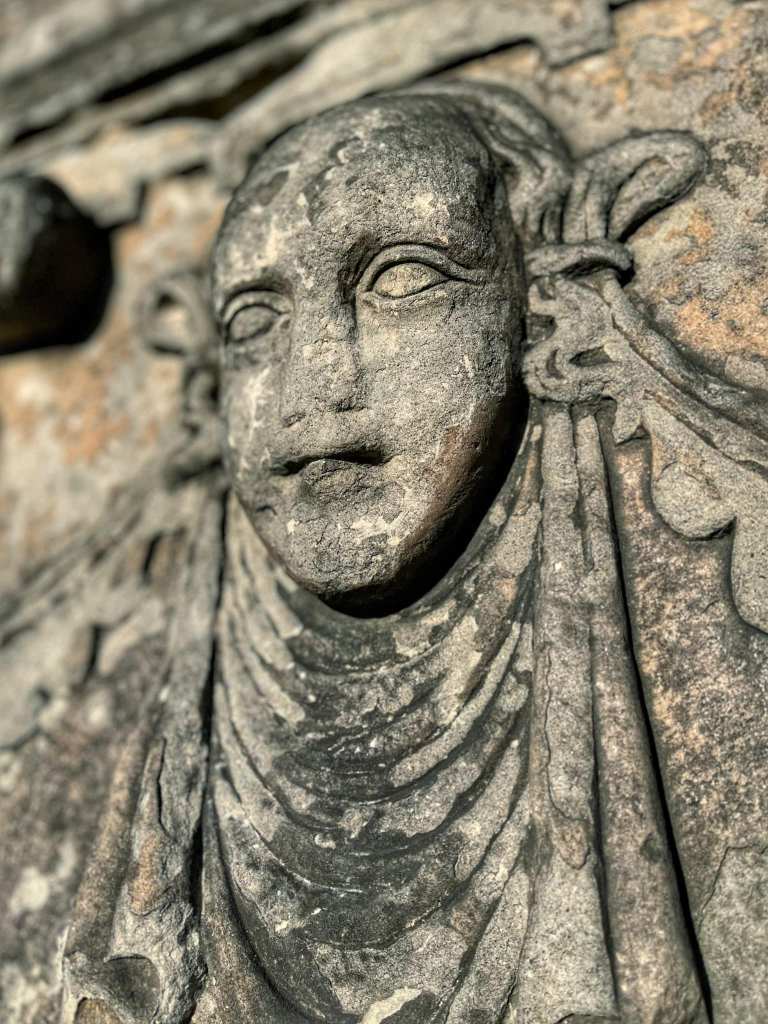
A classic Robert Mylne design in which the central panel is made up of drapes, held up in the mouth of a beast.This small foliate face (aka Green Man) is on the monument.A winged spirit underneathFlanking the left side of the monument is a large Angel holding a skull on their knee (Angels have no gender).On the right side the flanking Angel holds the scales of judgement. Note the all seeing eye of god depicted in the centre of the swirl to the left.
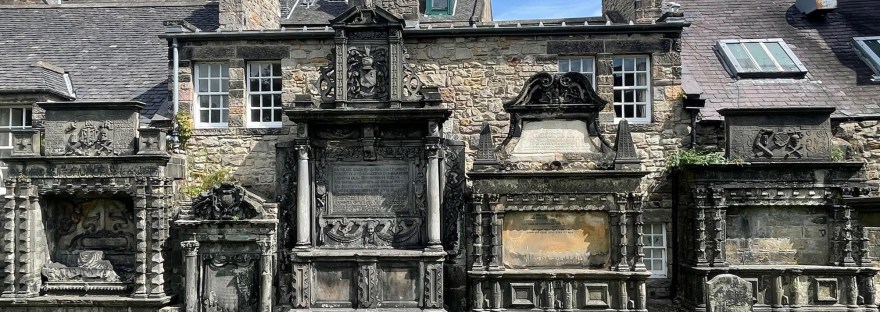
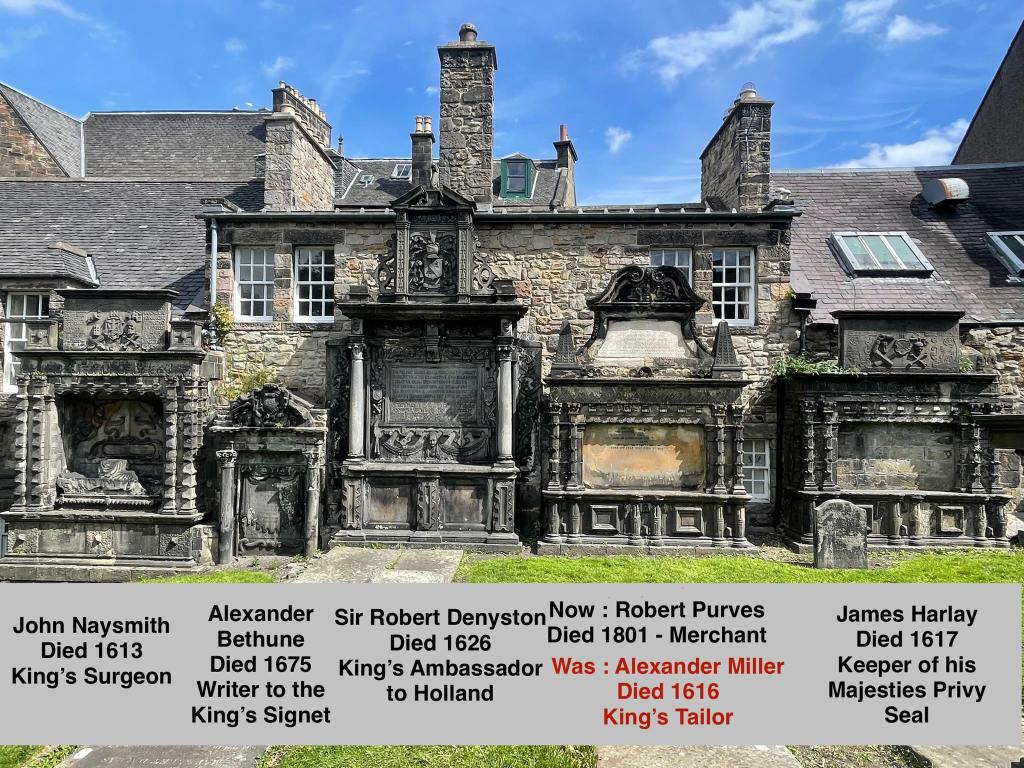
The East Wall of Greyfriars Kirkyard (that backs on to Candlemaker Row) has a line of 17th century monuments. This annotated photograph shows my suggestion that the monument second from the right was originally raised for Alexander Miller, the Tailor to James VI, who died in 1616. Now conventional wisdom says that the Alexander Miller memorial was originally near where the main gate into the Kirkyard now is from Candlemaker Row and that when that gateway and the Recorders Office (now Bobby’s Bothy used by City of the Dead Tours) was built Alexander Miller’s memorial was removed, never to be seen again. But I suggest either Alexander Miller’s memorial was simply moved 75 yards or so to the North and re erected here, or possibly that it was always here and the suggestion that it was originally where the gate now is was incorrect. The Theatre of Mortality book written by Robert Monteith in 1704 places Alexander Miller’s memorial between Dennistoun & Harlay (or at least that is the order he lists their inscriptions). It was James Brown in 1897 who wrote that Miller’s memorial had been taken away when the gateway and the Recorders Office was built. James Brown gives the details of this memorial (2nd from the right) as being that for Robert Purves, who was around in the 19th century. Obviously the monument itself is a 17th century work, but Purves probably bought it to use as his family memorial, thereby removing any reference to Alexander Miller. This was the fate of a number of other memorials along the East Wall. What do you think ?
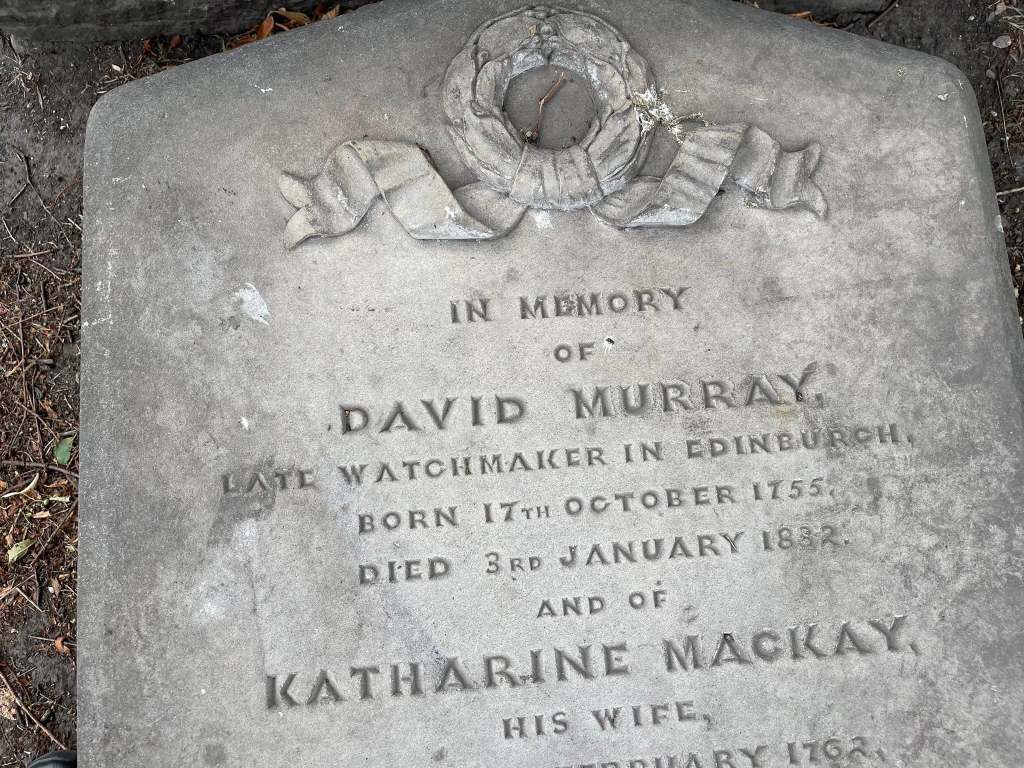
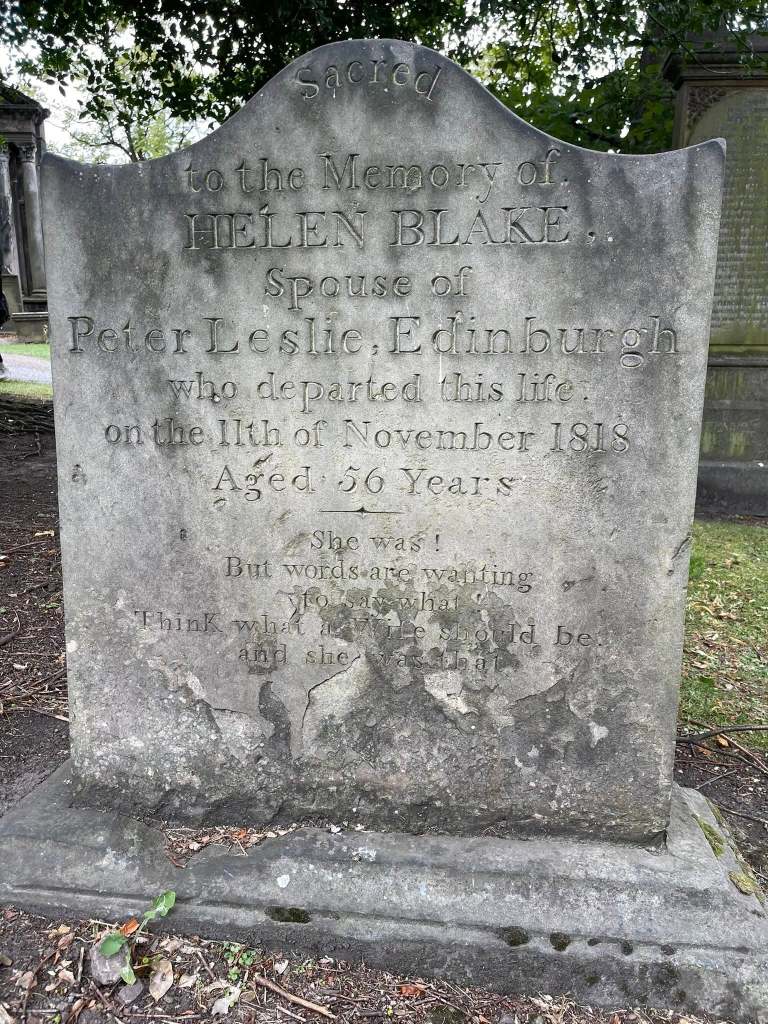
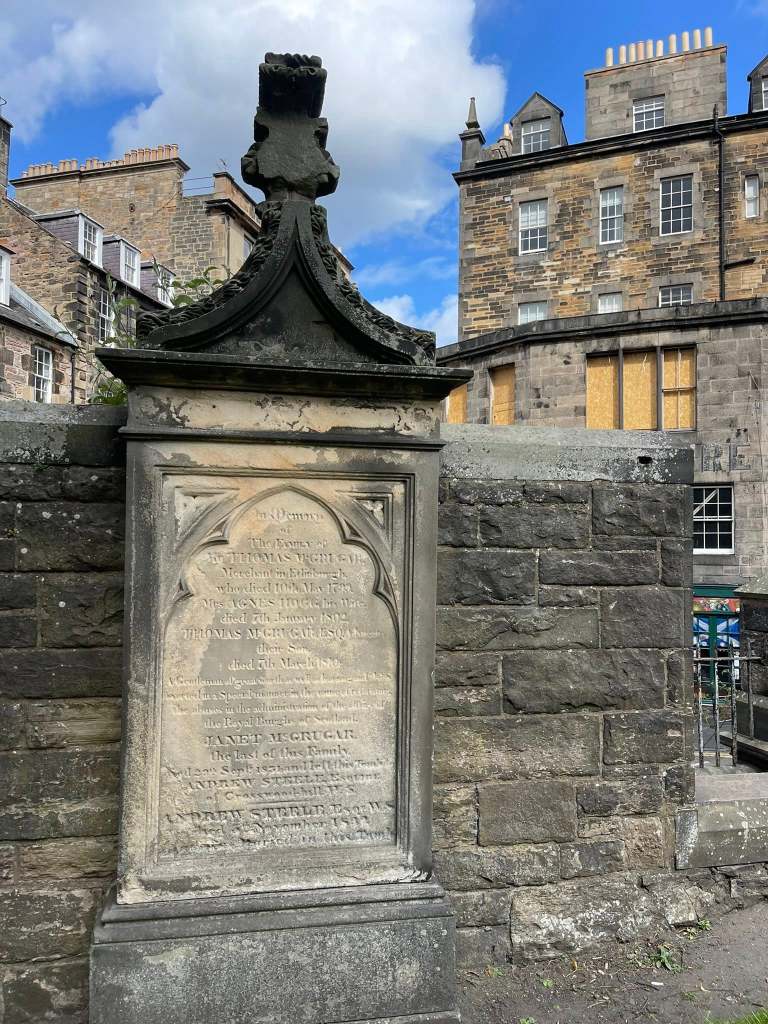
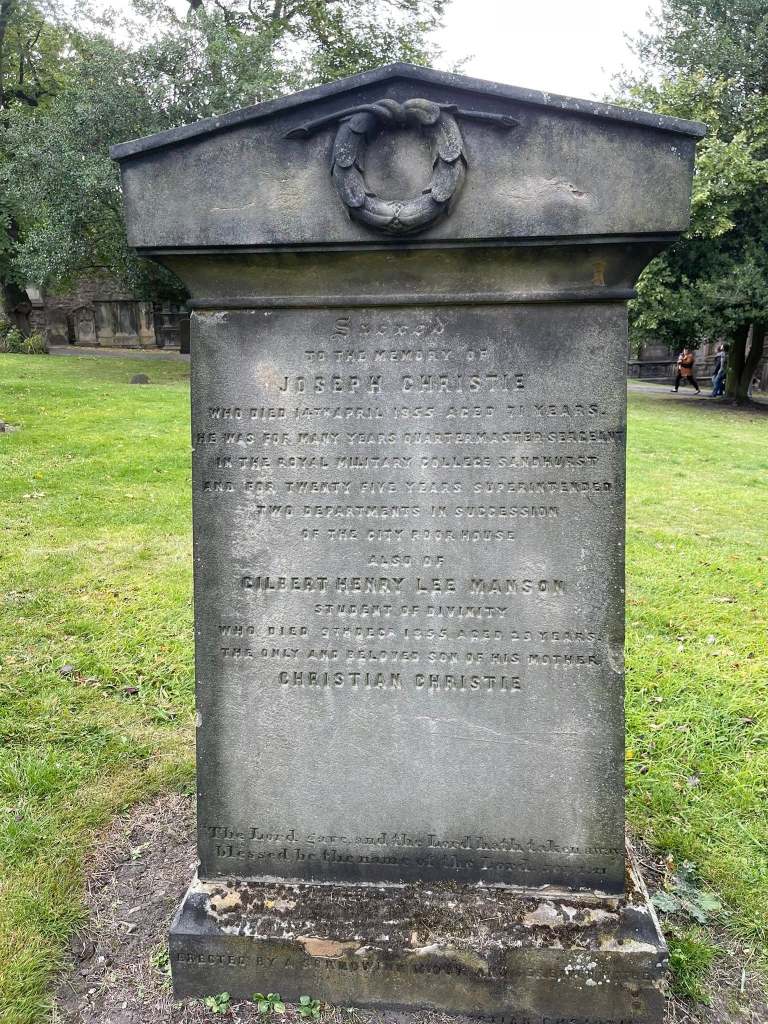
Every gravestone tells a story & gives us a glimpse of lives past. How people lived, how they made their living, the society they lived in & how they died. Maybe some clues as to their personality, their hopes & fears, their beliefs & values. These are 5 quite random gravestones that caught my eye in Greyfriars today. Non have the eye catching symbolism, scale or sophistication of the large mural monuments. They are all 19th century examples, by which time headstones were simpler, narrative heavy, symbolism light designs. So why did each of these catch my eye and cause me to pause for thought ? The answers are on the caption of each of the images.
David Murray 1755 – 1832
Ok, so obviously Watchmakers can’t live forever. But maybe not ideal to describe one as a “Late Watchmaker”, as that made me think he may not have been that good at making reliable time keeping instruments ;o)
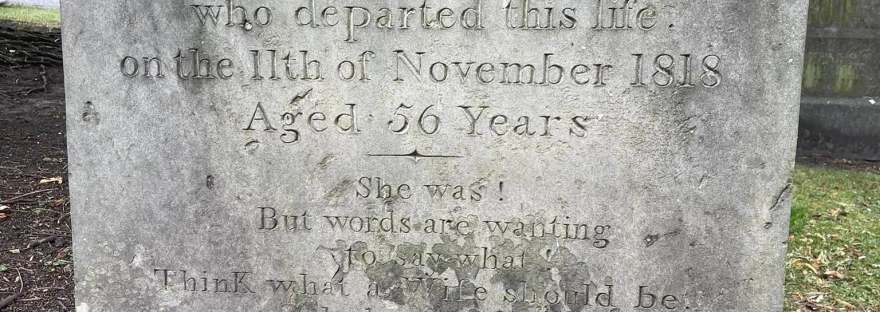
Helen Blake 1818
The epitaph here caught my attention. I am well used to reading long winded, gushing epitaphs that take great pains to describe the extraordinary virtues of the deceased. But here the epitaph for Helen Blake, written by her Husband, Peter Leslie, has been reduced to the following : SHE WAS ! BUT WORDS ARE WANTING TO SAY WHAT THINK WHAT A WIFE SHOULD BE AND SHE WAS THAT
Thomas McGrugar
The boarded up windows in the background are the back rooms of The Elephant House cafe where JK Rowling sat writing Harry Potter. If she did visit the Kirkyard looking for suitable names for her characters, maybe she should have spotted and used this one. McGrugar surely would have made a good name for a Professor of Magic ;o)
Joseph Christie
Joseph Christie started his career as Quartermaster Sergeant at the Royal Military College at Sandhurst. He then spent 25 years as the superintendent of the City Poor House, which was adjacent to Greyfriars.
William Coulter
William Coulter was a Soldier who served two campaigns in Portugal, “gaining the esteem of his equals and the confidence of his superiors”. Sadly he fell at the Battle of Albuera in 1811 aged only 21, “bequeathing to his afflicted parents the sweet consolation that he was worthy of his Country”. The Battle of Albuera took place on May 16, 1811, near the Spanish village of Albuera, not in Portugal. It was a major clash during the Peninsular War, involving British, Spanish and Portuguese forces standing together against the French. The battle was known for its fierce fighting and high casualties, particularly among the ranks of the British infantry.
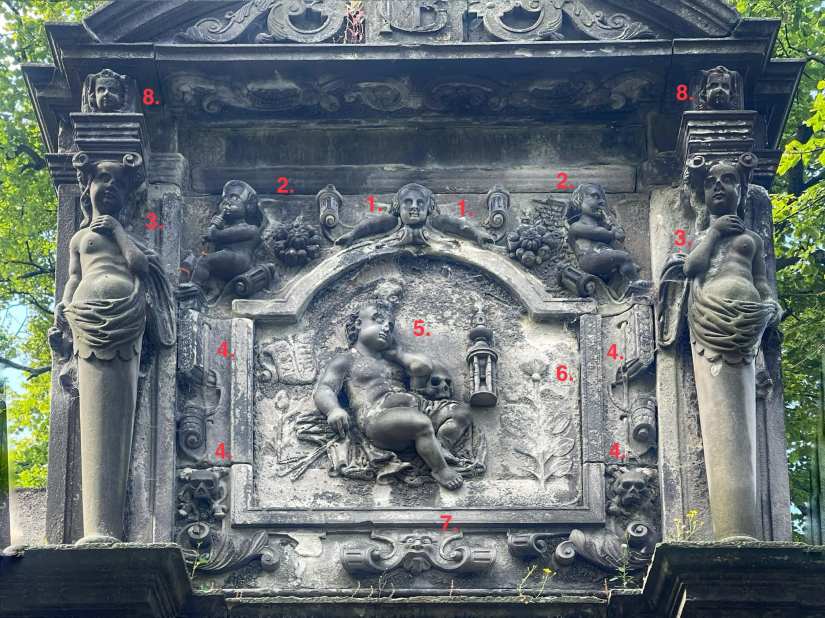
The upper section of the Foulis Memorial is so high above ground level that it is difficult to fully see and appreciate the intricate artistry and symbolism that resides here. A few unusual elements that must have been a stern test of the stonemasons’ skills include :
The cherub’s arms & hands are holding the frame of the scene below.
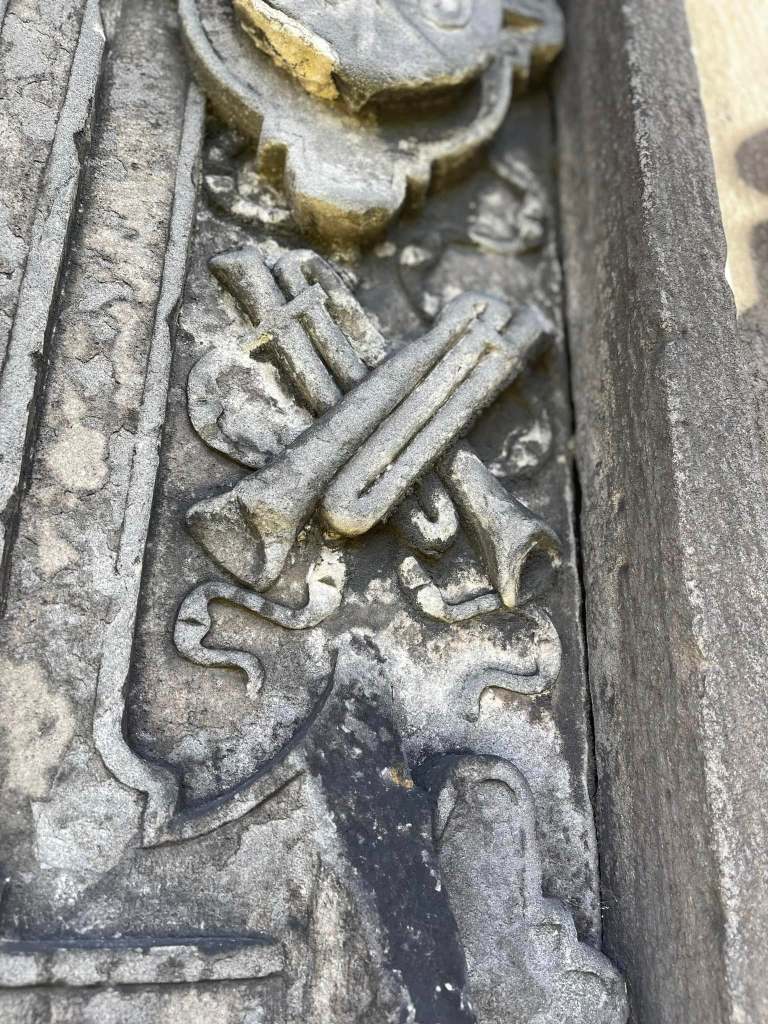
A pair of winged cherubs are blowing trumpets of resurrection. They symbolise that the dead will arise.
Pregnant female figures (in the form of caryatids) stand either side, naked from the waist up. They symbolise that the dead will be reborn.
The skull & cross bones are tethered by ornate ropes which are threaded through the frame. This must have been exceedingly difficult to carve. These symbolise that we all will die and our mortal remains and possessions will remain on earth whilst our soul ascends to heaven.
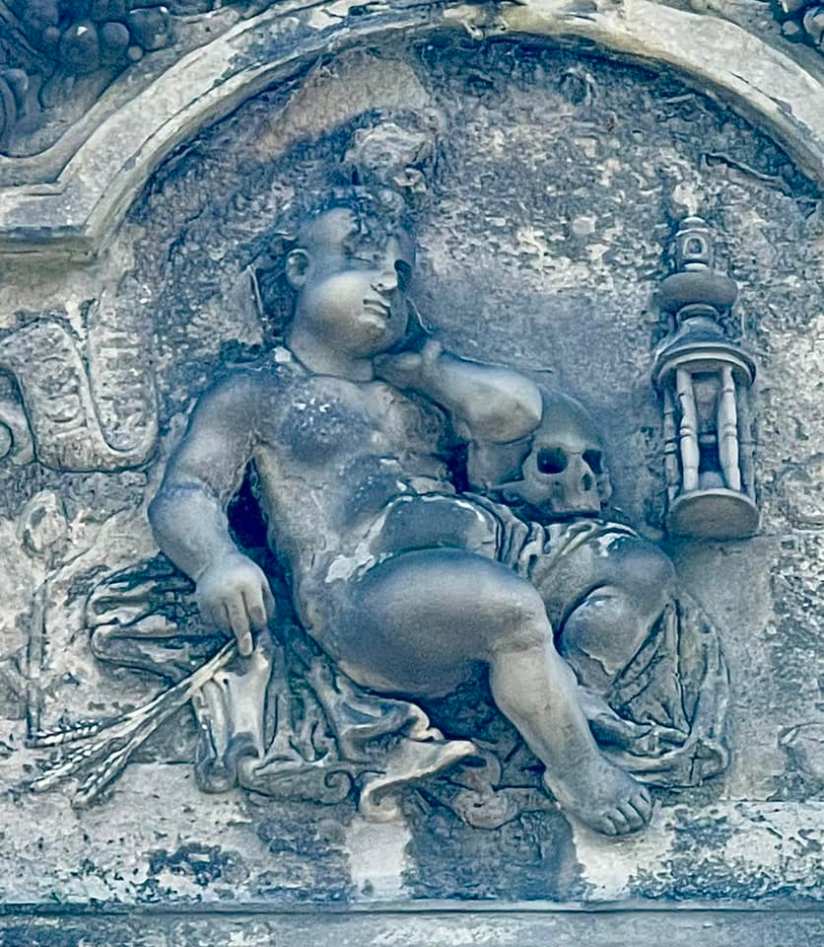
The large central cherub is shown in a relaxed contemplative pose, surrounded by symbols of death (skull & hour glass) and resurrection (flowers, foliage & crops)
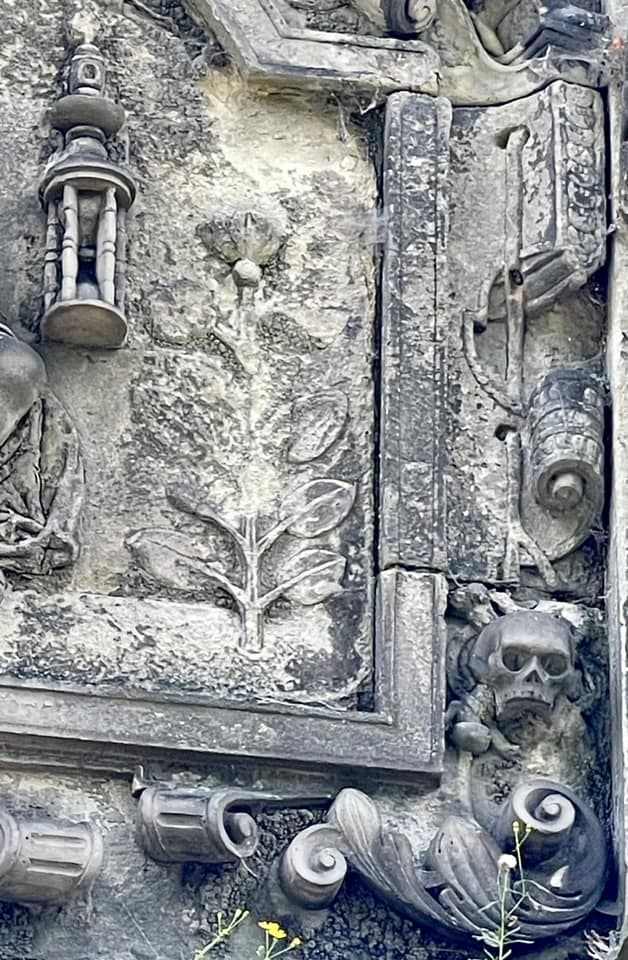
The large flower symbolises the beauty and vulnerability of life, as well as the power to be reborn after death.
A “green man” hides in plain sight on the lower border. The face is covered in foliage, symbolising new life growing after and out of death.
The winged heads symbolise the soul of the deceased ascending to heaven. The whole Foulis memorial is a tour de force of the art of the stonemasons. No expense has been spared, no corners cut and no technical challenge was regarded as too great. The Foulis family did not achieve fame by playing an enduring role in the big social, political, military, religious, economic or scientific events of their day. They simply earned a fortune, mostly from money lending. Yet this memorial has earned them an enduring fame as we still discuss them today. The cost of this memorial must surely make it one of the most expensive of any we find in burial grounds in the whole of Scotland dating to the 17th or 18th centuries. But we can confidently conclude that the Foulis family received good value for money as by spending big, their name lives on, which is what a memorial seeks to achieve. George Heriot, another major money lender of the same period and a relative of the Foulis family, achieved the same result. But not by financing a big memorial above his burial place (which is at St Martin-in-the-Fields in London) but by leaving much of his fortune to establish Heriots School and Heriot Watt University. Those endowments amounted to over £25,000 (equivalent to £25 million today). The Foulis family will have spent a fraction of that amount on this memorial, but I estimate it will have cost up to £500 (or £500,000 in today’s terms).
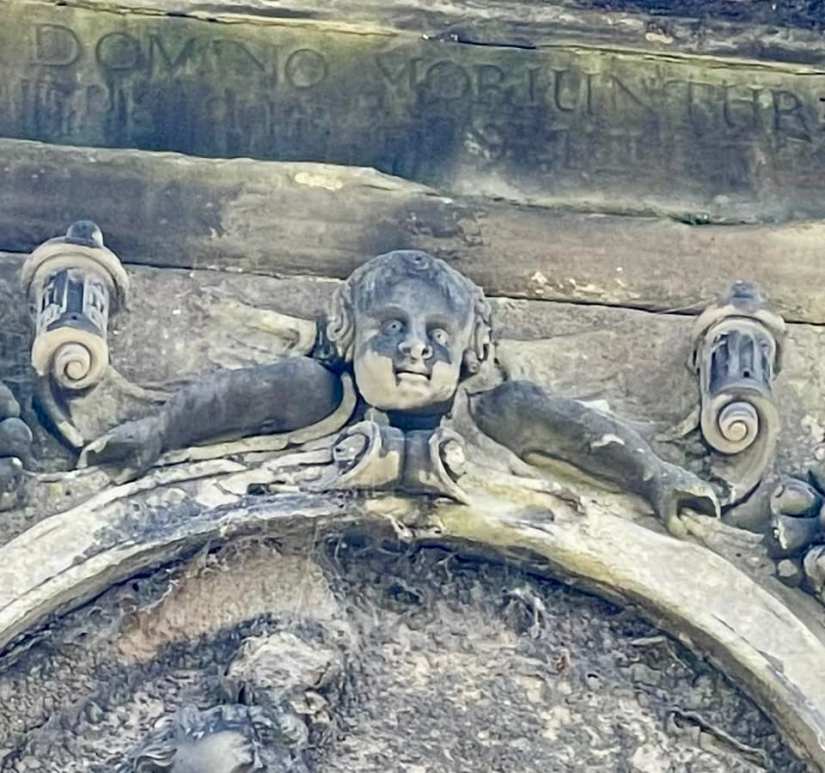
1 Winged cherub framing scene
This is the winged cherub whose arms appear to be holding the whole upper central scene. It is a most unusual pose, that must have been difficult to carve and could easily be overlooked. But once you see it, it is a detail that adds interest and impresses us further. The facial features are brilliantly carved giving the figure a personality & warm quality.
Winged cherub framing scene
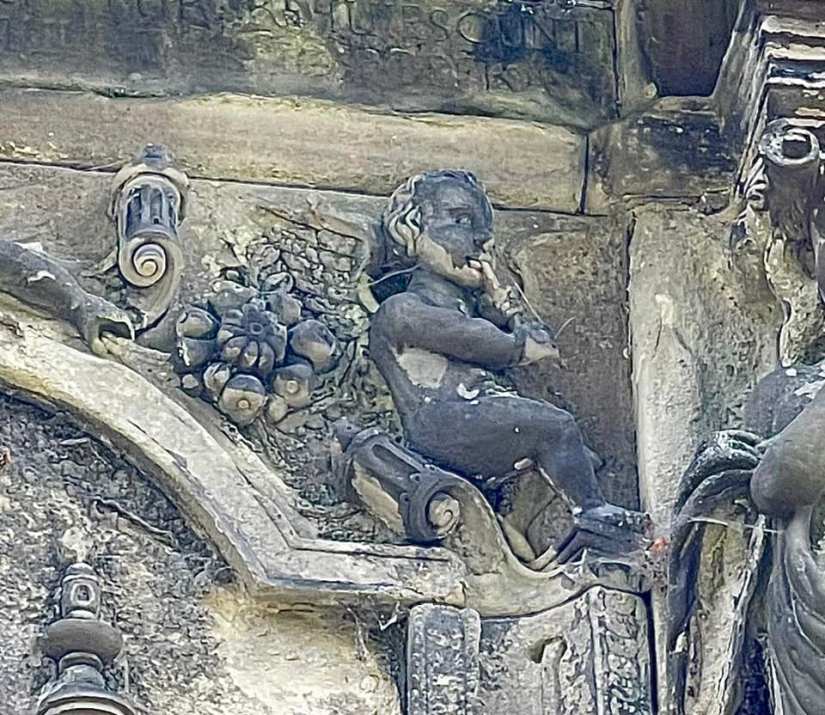
2 Winged cherubs with trumpets
This is one of the pair of winged cherubs (angels) blowing trumpets of resurrection, pointing down towards the ground in which the dead are buried. They, like all of the Cherubs on this monument, have a very life like appearance, with a particularly well carved mouth, nose & eyes. They seem to display a deliberately warm & friendly character. The floral, fruity display behind them is further reinforcing the resurrection/ new life after death message.
Winged cherubs with trumpets
3 Caryatids
The pregnant & naked female figures forming the columns either side of this upper panel. These are Caryatids, a classical architectural device found on Ancient Greek buildings. This is a deliberate effort to evoke classical art, demonstrating the sophistication and education of the family. The figures are here to symbolise the power to bring forward new life. They are supporting their heads by holding their necks.
Caryatids
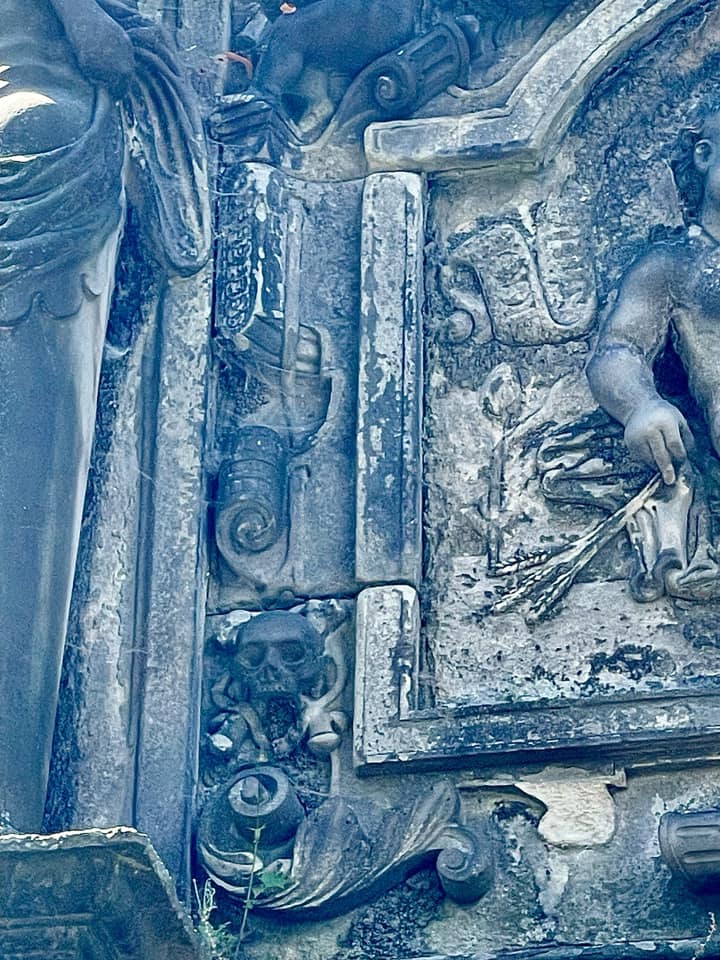
4 Skull & crossbones
The skull & cross bones is the most prevalent mortality symbol, serving to remind viewers to prepare for their inevitable death by living a good Christian lifestyle. The message is often reinforced by tethering the symbol with a rope or ribbon, symbolising that earthly assets and matters are of no value to us after death. A big effort has been made here to show the tether which is shown threaded through the structure to emphasis how securely bound it is. At the ends of the tether are decorative tassels that add weight.
Skull & crossbones
5 Central cherub
The central Cherub is shown, eyes closed to empathise its contemplative nature. It rests casually on a large skull, beside a brilliantly carved hourglass which has a flaming torch on top. The message is to contemplate death, the time of which will inevitably arrive, without any suggestion that these people fear death. This is designed to tell us that they are fully confident of their resurrection and admission to heaven so death holds no concerns, indeed death is the gateway to a new blissful life in heaven.
Central cherub
6 Flower
The large flower with leafy stem symbolises the frail, temporary beauty of life and the ability for life to go on after death (like flowers can die back in the autumn but grow up again in the spring). The carving of this element is less pronounced than the rest of the scene so sadly it has faded somewhat, compared to the still vibrant carvings that surround it.
There are countless tales to be found, hiding in plain sight around Greyfriars Kirkyard. Here is just one more example.
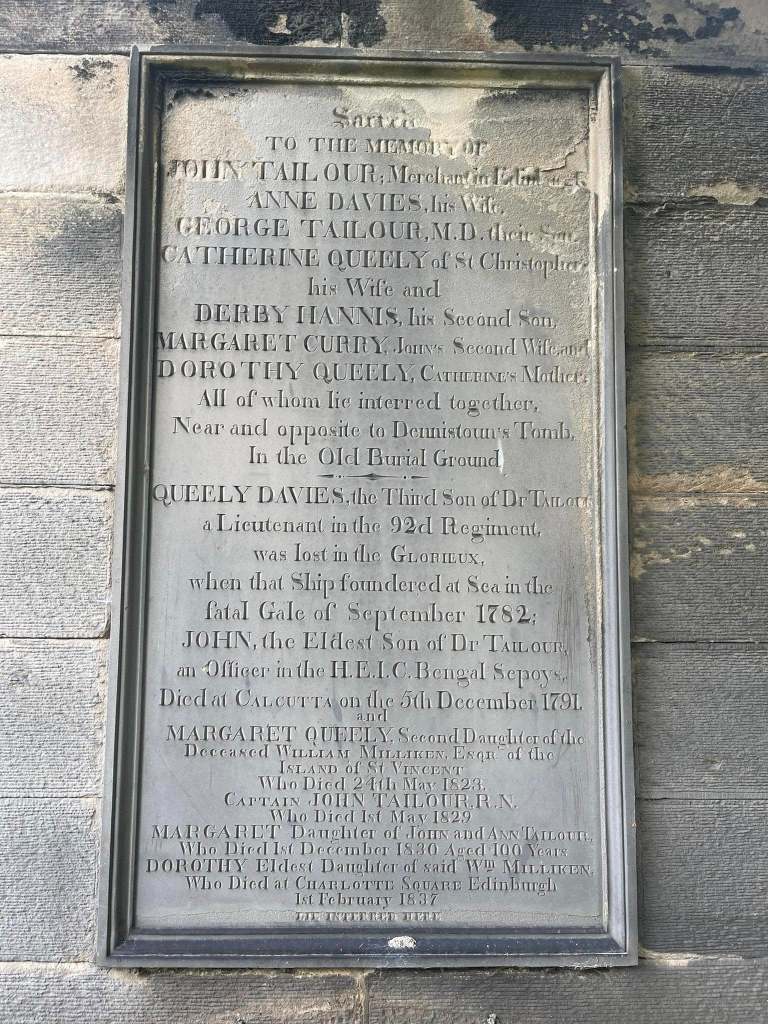
On the North Wall of the West Yard of the Kirkyard is a memorial stone for the Tailour Family. Included on the inscription are the words :
“Queely Davies, the third son of Doctor Tailour, a Lieutenant in the 92nd Regiment, was lost in the Glorieux when that ship foundered at sea in the fatal gale of September 1792”.
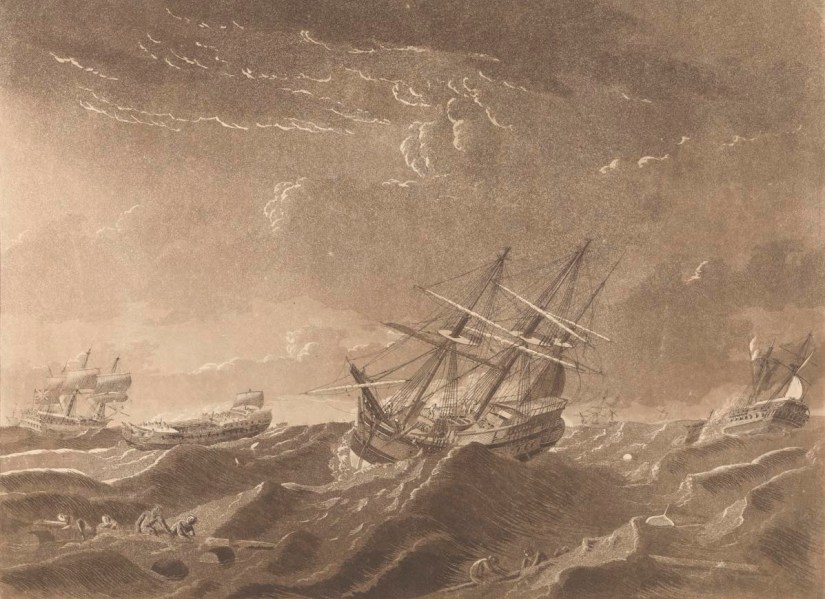
This short inscription opens up a story of the worst ever loss of life incurred by the British Navy & Merchant Navy in a single storm. HMS Glorieux was a French naval ship that had, together with other French ships, recently been captured by the British in the Caribbean. These ships were all in poor condition and there was a serious shortage of sailors to crew them. But the fateful decision was made to sail these ships back to Britain in a flotilla, during hurricane season. They sailed up the East coast of North America then on reaching Newfoundland they struck out across the Atlantic. On 17 September 1782, the fleet was caught in an extremely violent storm off the Grand Banks of Newfoundland. Most of the ships were unable to prevent the storm ripping off their masts and bursting open their weakened hulls. In total almost 3,500 British sailors drowned and a dozen ships were lost in the infamous storm, including HMS Glorieux on which Lieutenant Queely Davies Tailour was sailing.
Other members of the same family died at Calcutta in India and St Vincent in the Caribbean. The 18th century was an age in which so many Scottish people spread out across the world, seeking to advance themselves by serving in the armed forces or working in overseas ventures, where they met their end so never to return to their native land.
Tailour family memorial stoneThe Morning after the Storm, with the distressed situation of the Centaur, Ville de Paris and the Glorieux as seen from the Lady Juliana
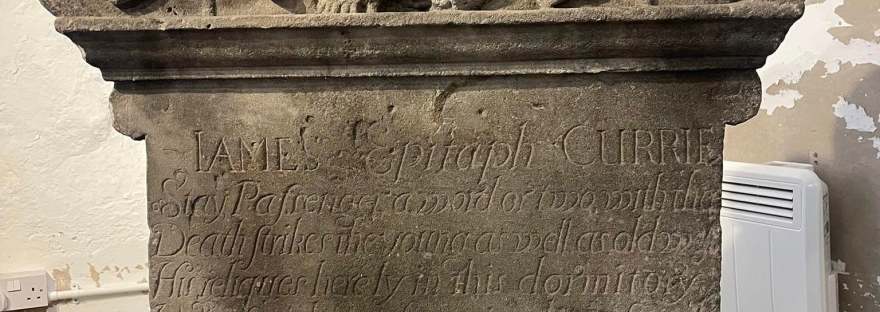
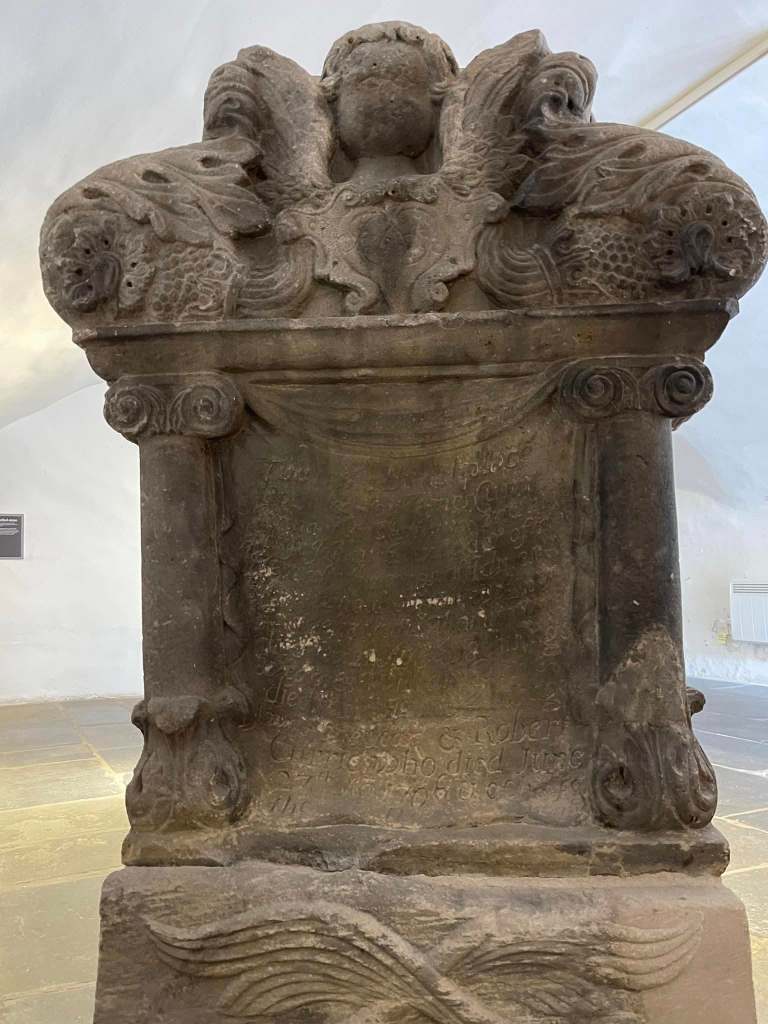
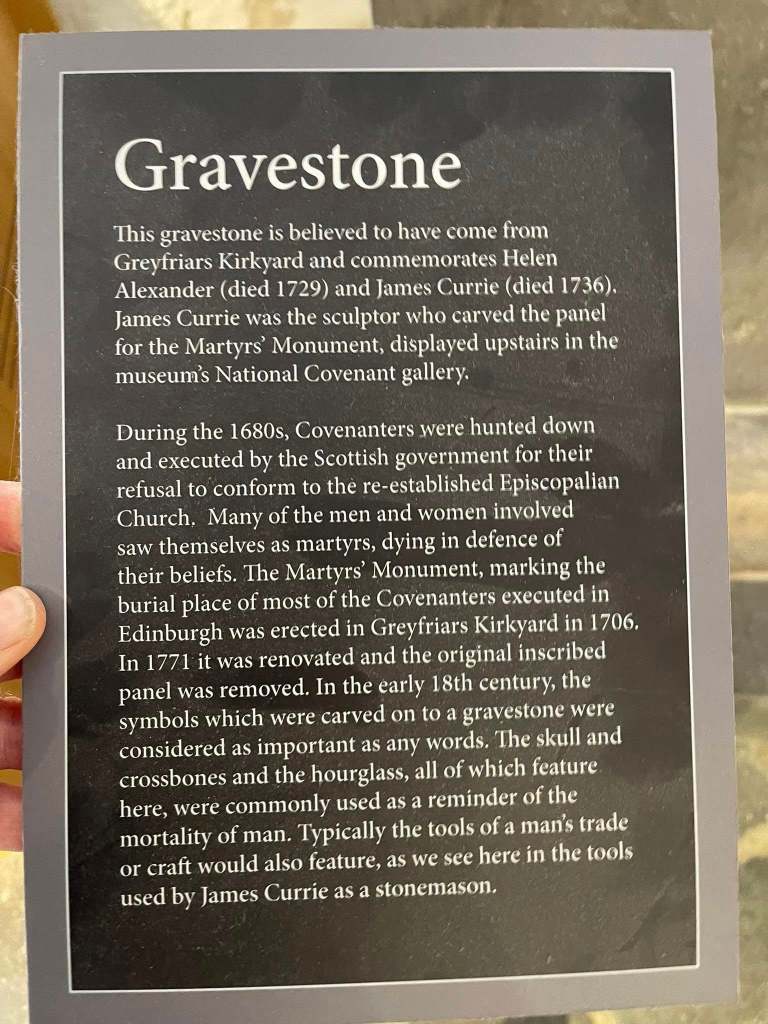
The Museum of Edinburgh at Huntly House on Cannongate has a gravestone which they believe was originally at Greyfriars Kirkyard. The gravestone records the names, ages and years of death as Helen Alexander, who died in 1729 aged 75 years & her husband, James Currie, who died in 1736 aged 80 years. The museum notice accompanying this gravestone provides a few inaccurate statements about it. It says this gravestone was believed to have originally been raised at Greyfriars and that James Currie was a Stonemason who carved the Covenanters Martyrs Monument at Greyfriars and that the gravestone features tools of a Stonemason. Non of these statements appear to be correct.
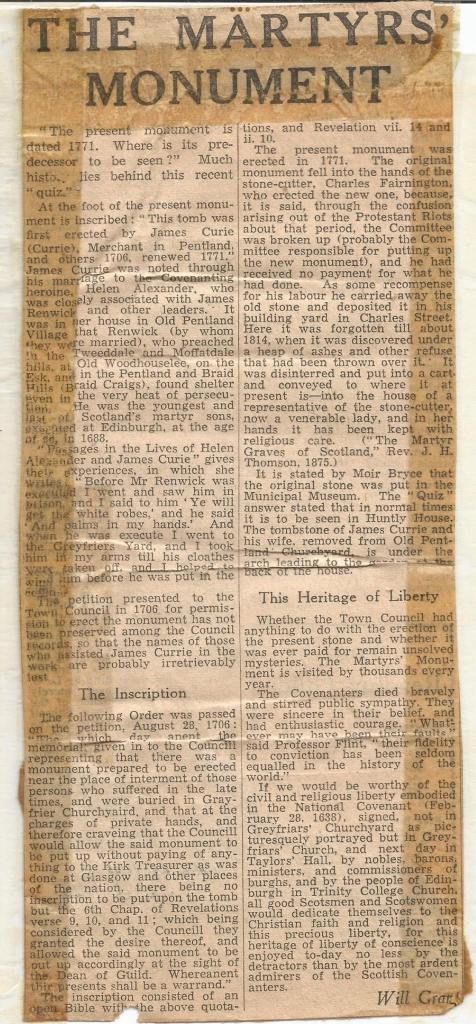
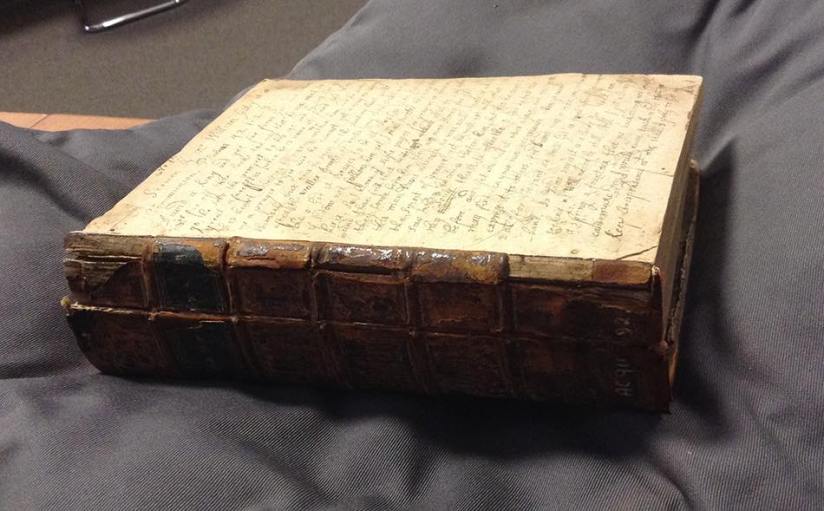
James was not a Stonemason, but a successful Merchant and together with his Wife, Helen, they collected a large number of testaments from Covenanters facing the death penalty in Edinburgh. This collection included sermons, speeches, writings and comments by many Covenanters dating from the 1650’s through to the 1690’s. James published this collection in a book that ran to over 780 pages.
James & Helen were primarily responsible for raising the first Martyrs Monument at Greyfriars. They came up with the idea, petitioned the Council, raised the funding and quite possibly drafted the inscription.
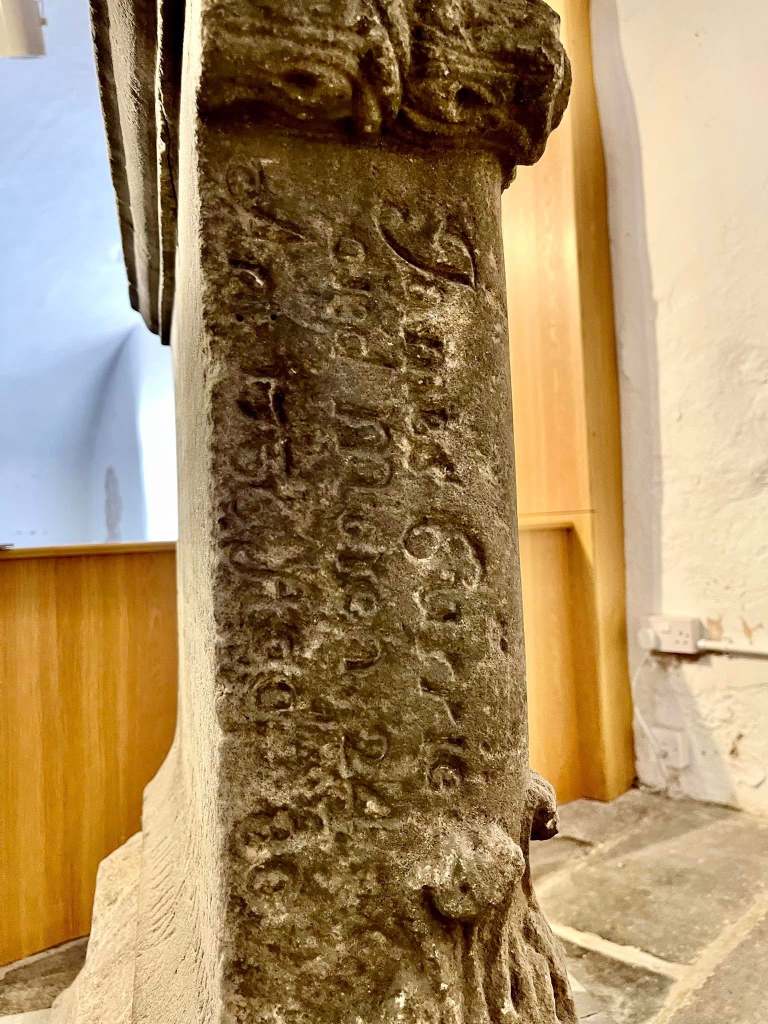
They died at the grand ages of 75 & 80 respectively and were buried in their Parish at Old Pentland. Their gravestone is an impressive example of the type produced in the 1730’s, carved on all 4 faces. Such headstones were not allowed at Greyfriars in that period as only mural (wall mounted) monuments and burial lairs were allowed arranged around the perimeter of the burial ground, with no freestanding headstones allowed on the grass until around 1750. This was because the volume of burials at Greyfriars was so great, headstones would have got in the way. The headstone symbols on James & Helen’s stones are the standard Memento Mori, skull, cross bones, scythe, with the gravedigger’s tools of spade, turf cutter & pick axe. The museum appears to have mistaken these for the tools of a Stonemason.
Attached are photos of each face of the headstone, plus the information panel. A photo of the book James & Helen published together with a newspaper article that recounts their story.
The Museum of Edinburgh, at Huntly House on Cannongate, EdinburghThe Museum of Edinburgh, at Huntly House on Cannongate, EdinburghThe Museum of Edinburgh, at Huntly House on Cannongate, EdinburghThe Museum of Edinburgh, at Huntly House on Cannongate, EdinburghThe Museum of Edinburgh, at Huntly House on Cannongate, EdinburghThe Museum of Edinburgh, at Huntly House on Cannongate, EdinburghThe Museum of Edinburgh, at Huntly House on Cannongate, Edinburgh
John Byres of Coates memorial at Greyfriars was carved by the Master Mason to The Crown, William Wallace in 1630/31. It is an outstanding example of the grand mural monuments that very wealthy families of Edinburgh commissioned in the period from 1625 – 1637, including Dennistoun, Henryson, Foulis & Bannatyne. Wallace died in 1631 so this was one of his last works, indeed the records of his estate show the debt for the work performed here was unpaid at the date of his death. William Ayton was Wallace’s successor as Master Mason to the Crown and he took on the task of producing these hugely elaborate monuments after 1631. Both Wallace & Ayton were responsible for much of the building of Heriot’s Hospital, a neighbour to Greyfriars, in the late 1620’s, 1630’s & early 1640’s. Ayton died in 1643.
John Byres was a successful money lender & landlord in the prosperous years of James VI’s reign. He lived on the High Street before he bought the Coates estates (the land just north of Haymarket Station in Edinburgh) and built a huge house with his wealth (that still stands today). John chose to commission the finest craftsman to create the most elaborate memorial, unmatched by anything that went before it. The design chosen is rich in complex symbolism which requires a lot of careful consideration to piece the whole meaning together.
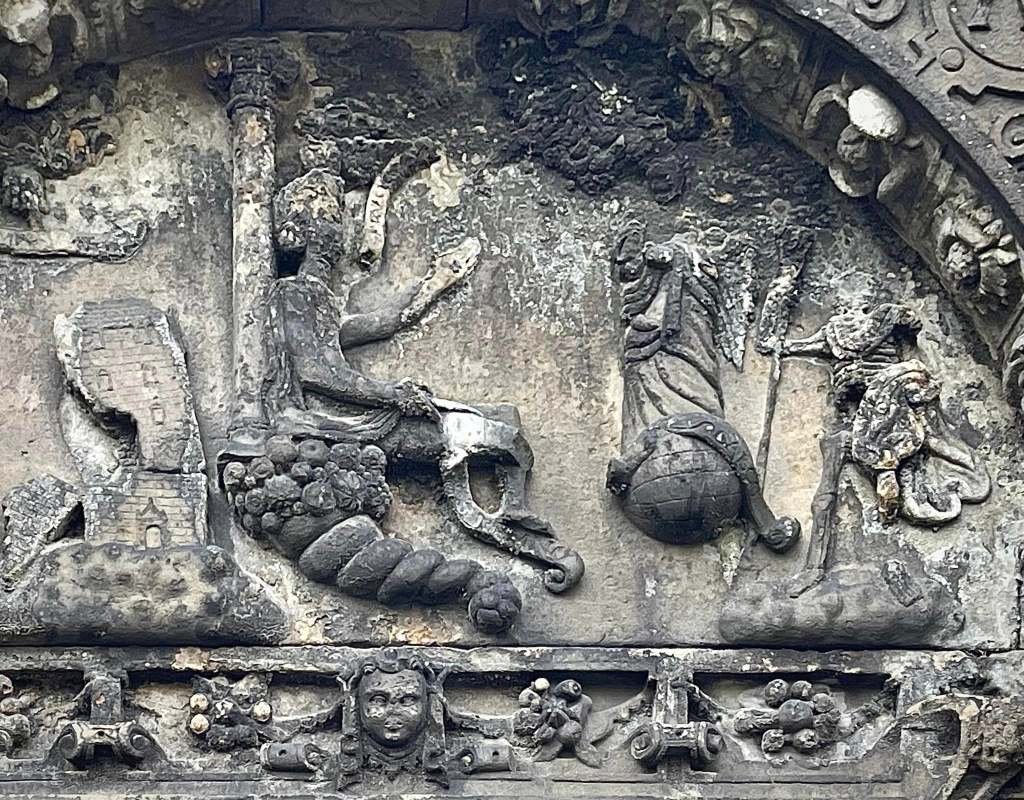
We are presented with a figure sitting on a Cornucopia with their back against a pillar, reaching out towards a winged figure standing on a sphere. Is that a book in their lap ? Death figures flanks the scene, carrying their darts & a burial shroud. A crumbling Tower refers to the Tower of Babel which speaks of man’s inability to reach heaven before they are called by God to do so. The cornucopia is a horn of plenty, overflowing with foods, fruits & flowers. There are arrangements of baskets of fruits, flowers & foliage all around the scene.
The overall message appears to be that death will arrive to take us, only then the righteous will be able to reach heaven above to enjoy the bountiful abundance provided by God. The figure sitting in the cornucopia with their back against a pillar, a book on their lap and reaching outwards. Is this John, or is it a heavenly figure waiting to judge or greet his soul ? Is the pillar a symbol of a steadfast faith & fortitude. Is the cornucopia symbolising a rich & bountiful life, or the promise of such in the afterlife. We could read this scene in several different ways and quite possibly that was the intention.
Today the monument is somewhat reduced by having lost its huge finial and the carving rather decayed. But the old photo gives a sense of just how grand this would have been.
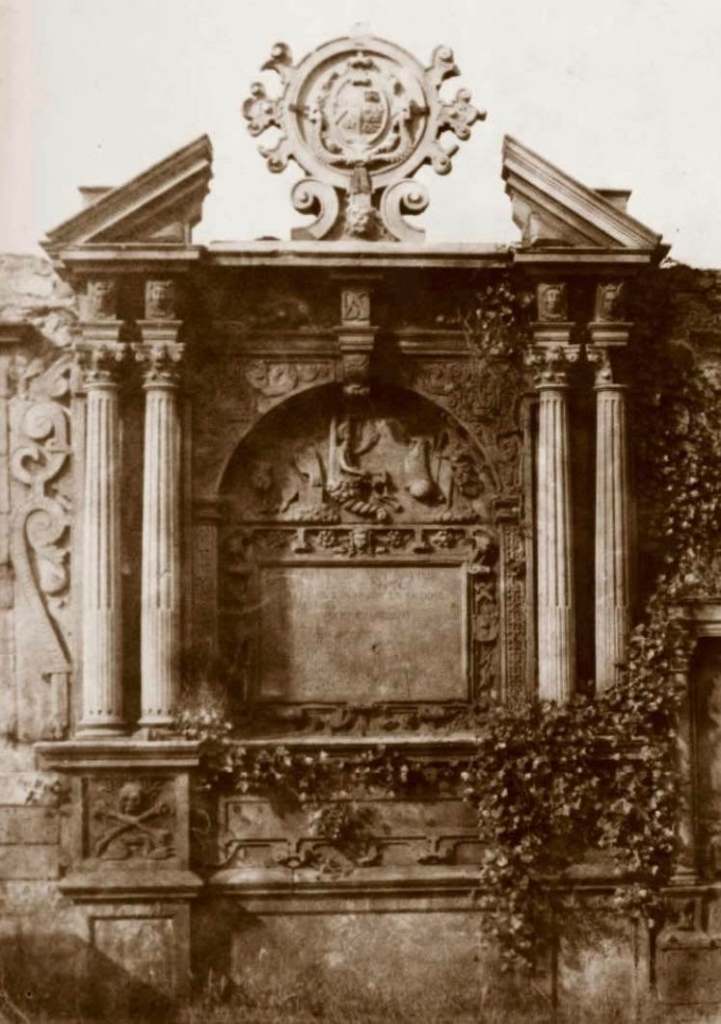
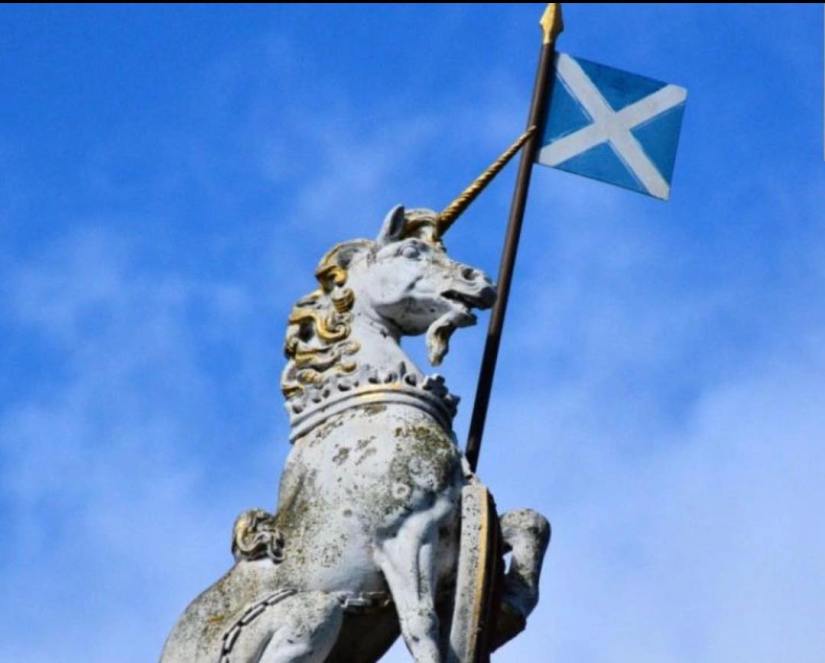
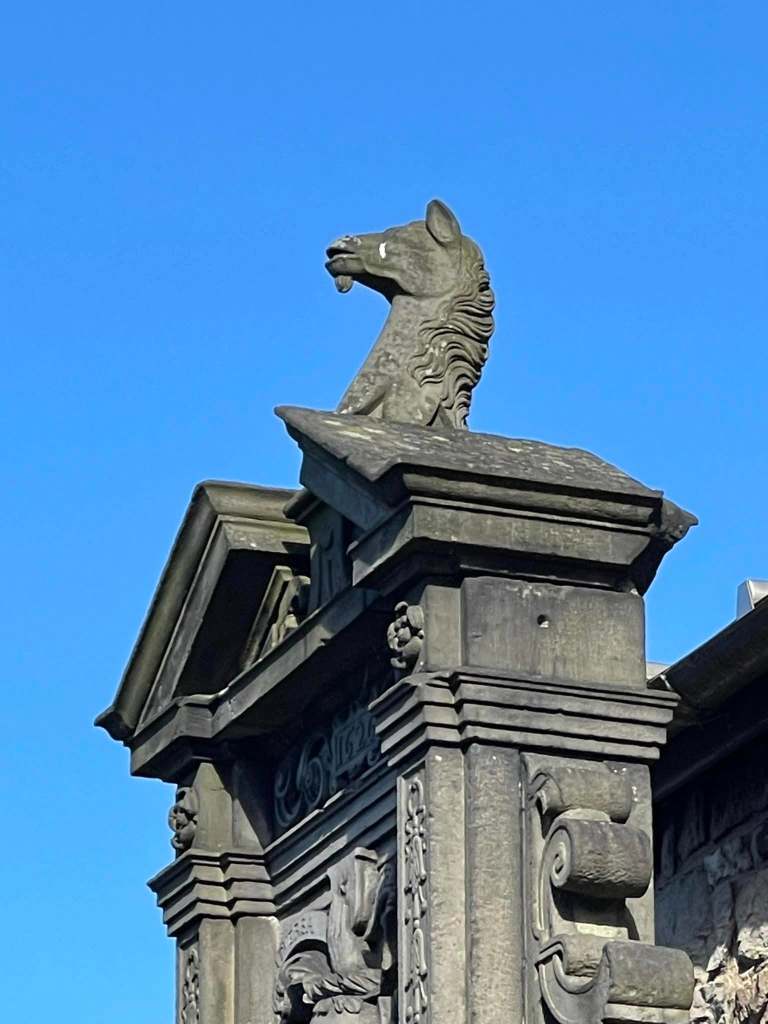
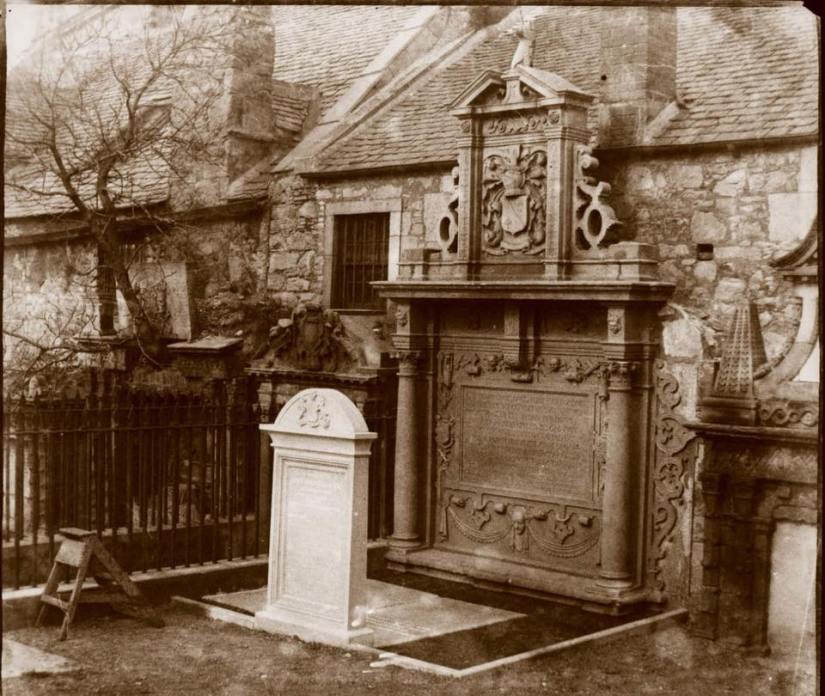
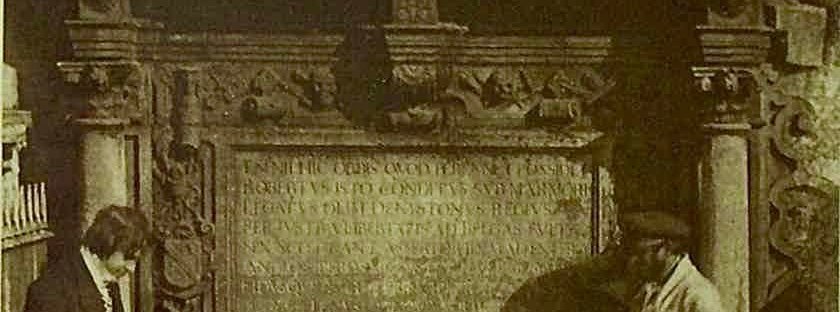
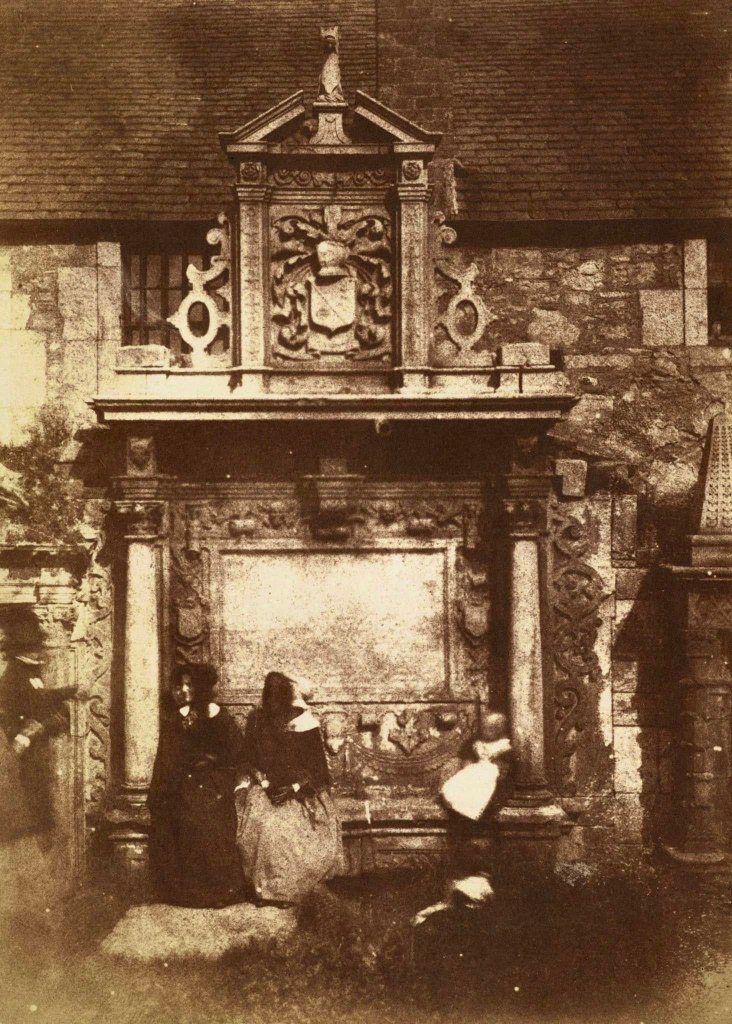
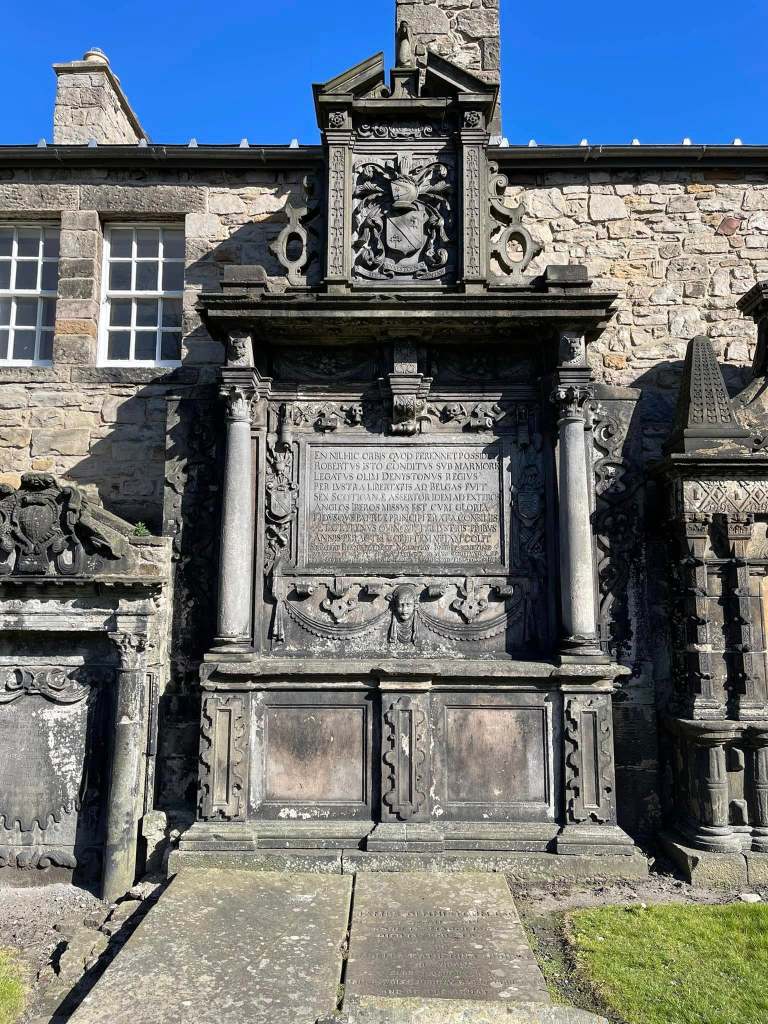
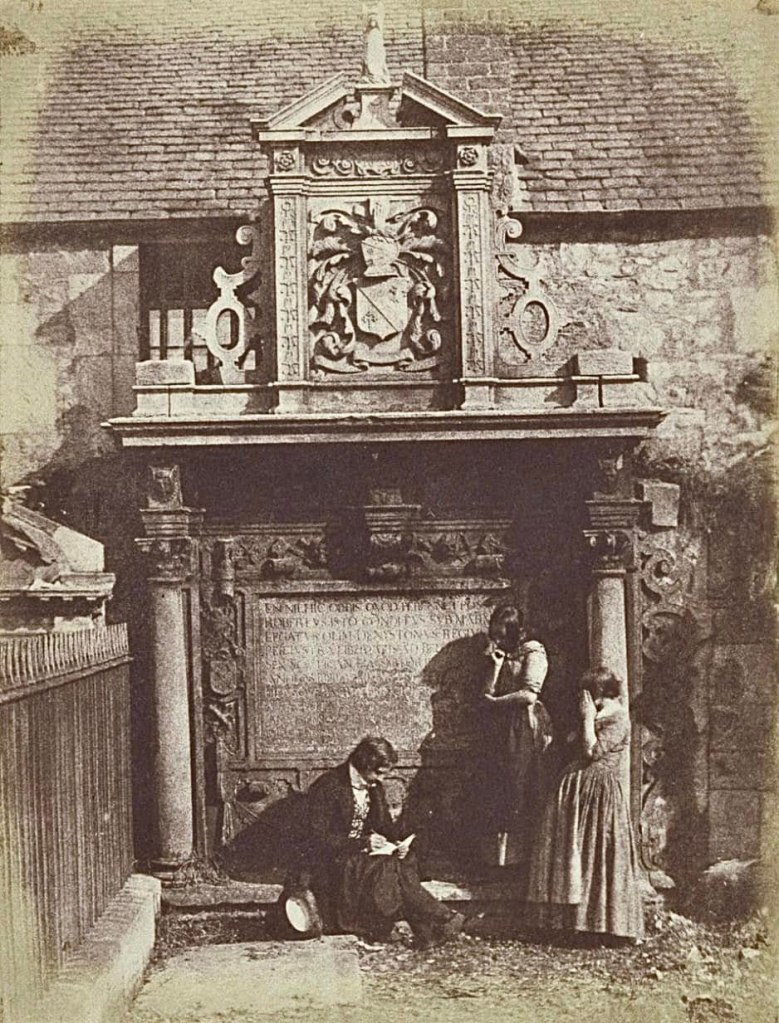
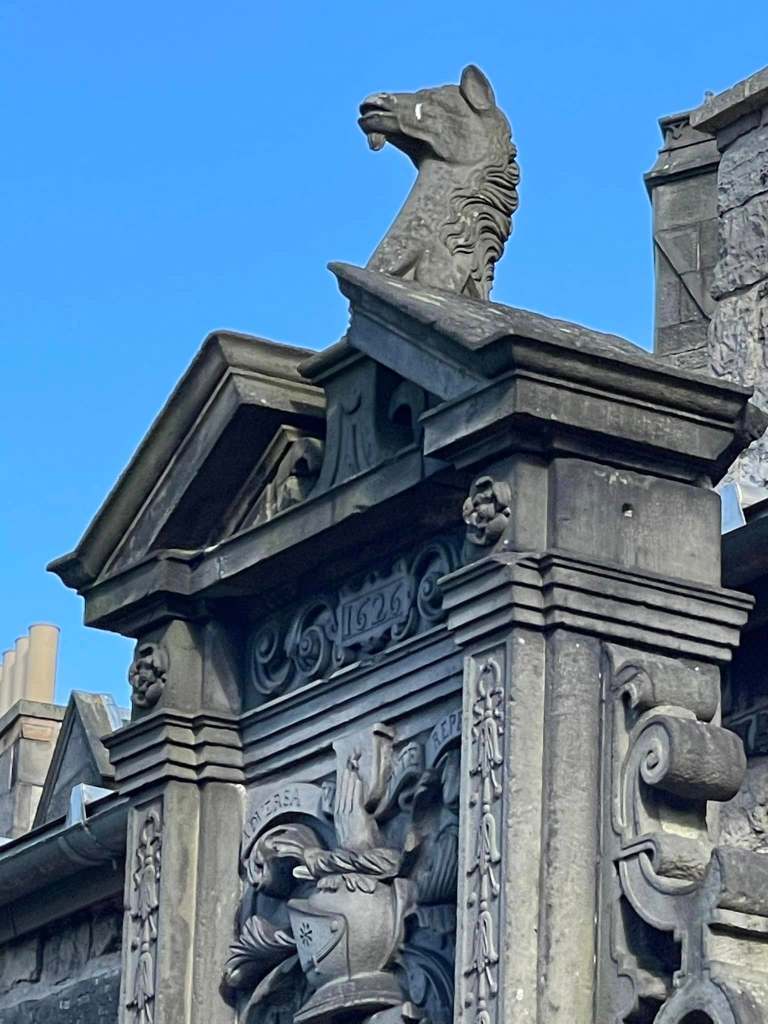
Is it a Unicorn that stands on top of The Dennistoun Memorial at Greyfriars ? Naturally it would have needed a single horn to be a Unicorn, but such a delicate appendage could easily have fallen off since the monument was erected in 1626. Perhaps the beard is a clue as Unicorns are traditionally depicted with a beard. In the 19thC photo there is the suggestion of a horn, but it’s a low resolution image and I may well be seeing things. The Unicorn as the National Animal Emblem of Scotland was very prevalent in the 17thC, appearing on top of Mercat Crosses all over Scotland. The example below is from The High Street Mercat Cross in Edinburgh. Dennistoun was a Scottish Ambassador so may well have been very fond of the Unicorn symbol. What do you think ?
Unicorn, Mercat Cross, EdinburghThe Dennistoun Memorial, Greyfriars Kirkyard, Edinburgh19th Century photo of The Memorial
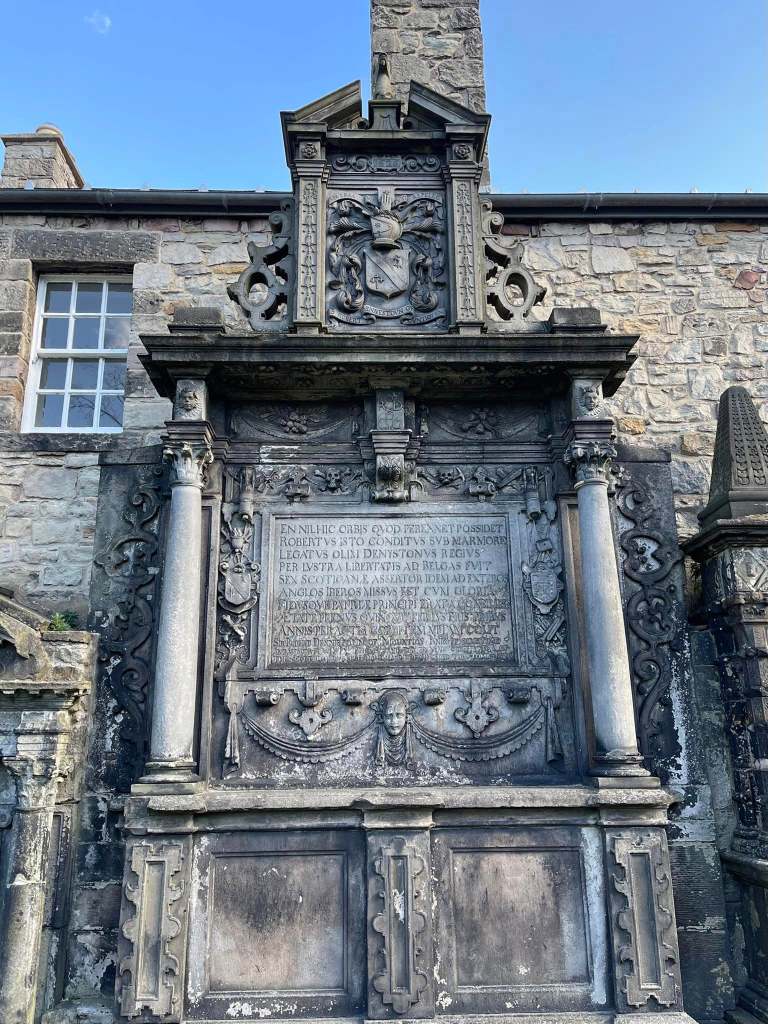
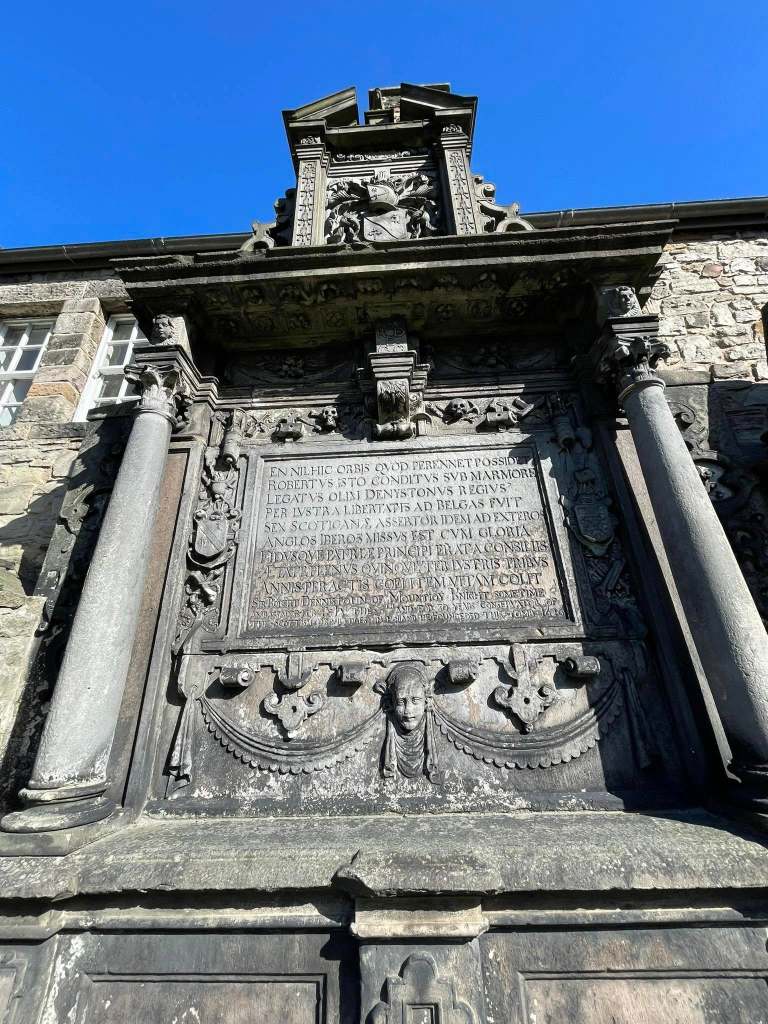
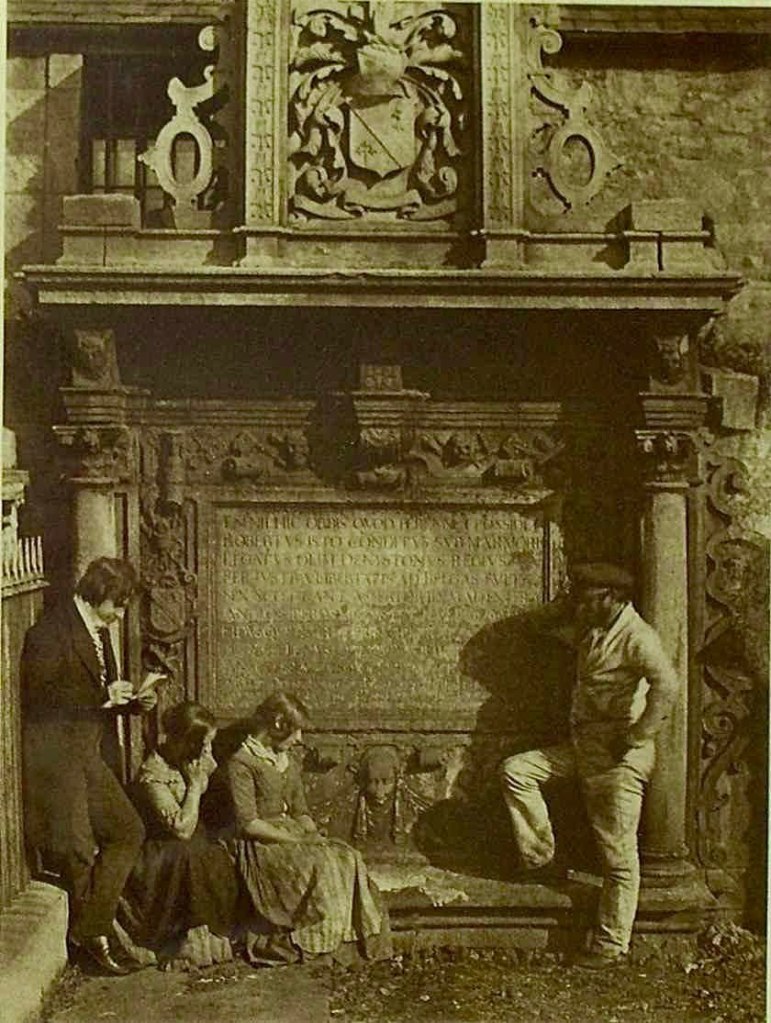
The Dennistoun Memorial is one of the most eye catching on the East Wall of the Kirkyard. As a result it was a particular favourite of early Edinburgh photographers such as David Octavius Hill and Robert Adamson. The memorial is dated 1626 and when raised it certainly broke new ground on the design of mural monuments at Greyfriars. Before this one, all of the earlier mural monuments are relatively conventional and quite formulaic. But Sir Robert Dennistoun had spent 30 years in Holland absorbing the style and designs that flourished there. He must have brought those ideas and images back to Scotland and used them to heavily influence the style of his own monument. I believe William Wallace was the Master Mason on this work, taking over from John Simpson who had carved the earlier examples on the East Wall between 1610 and 1620 which all are niche tombs with pilasters (where the columns are integrated in the stonework and not separate load bearing columns). This style was a copy of monuments that the wealthy had commissioned inside the Churches of Scotland for a century or more before the Reformation, often with an armour wearing Knight lying in the niche.
William Wallace brought a great deal more grandeur, flair and symbolism to his work than Simpson had done. Wallace was the first to feature magnificent freestanding columns carved from a single separate piece of stone. On the Denniston he carved one column on each side of the monument with great visual impact. Later monuments went one better and chose to arrange such columns in pairs, so having 4 in total on John Byres of Coates, Henryson, Foulis & Bannatyne. All of these monuments adopted the same extensive strap work, flamboyant & provocative symbolism with large winged spirits. These are unquestionably the finest 17th century outdoor monuments in Britain, with Dennistoun and his extensive Dutch influences playing a big part in this.
The Dennistoun Memorial 1860
When first installed the Dennistoun Monument was lower to the ground. Sometime in the later 19thC the monument and others adjacent to it were raised up by adding a higher base layer. This increased their grandeur to be on a par with those on the west wall and made it less easy for people to sit on them like appears on this photograph from 1860.
That young child to the right & the faceless woman to the left are a bit disconcerting.
You can see here how the base platform has been added which doesn’t appear on the earlier black & white photos taken in the mid 19th century.
This image features David Octavius Hill & his nieces.
This shows how Denniston stands out from the slightly earlier monuments to each side. They lack the monolithic columns and extravagant symbolism that are so powerfully deployed by William Wallace on Denniston.
The grand heraldic tympanum complete with horse’s head on top of Dennistoun.
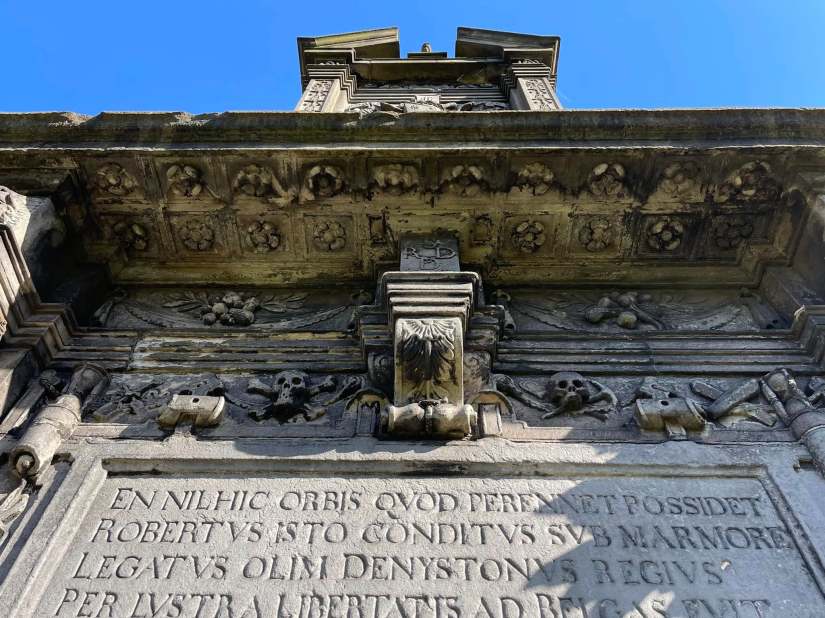
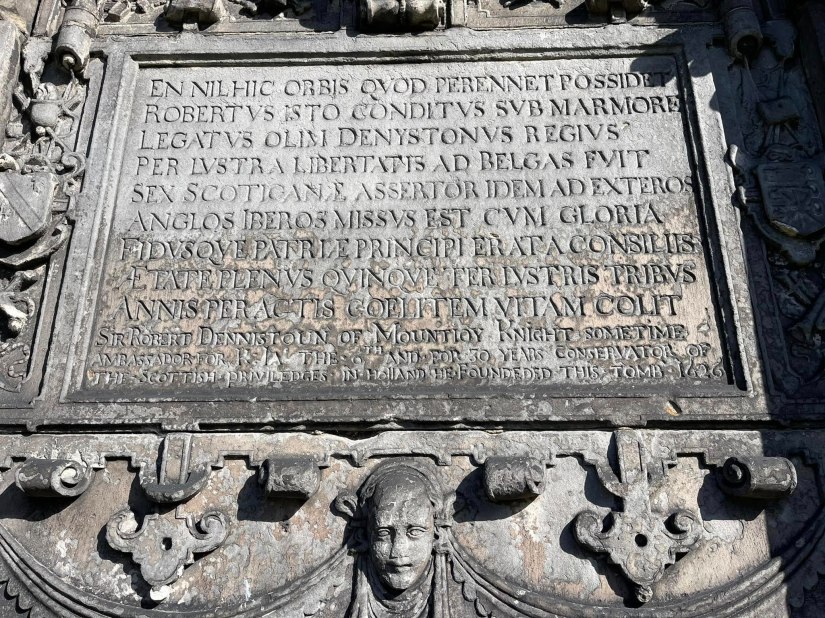
The inscription tells us that “the world possesses nothing permanent”. The symbolism on show here is far greater and more powerful than those on the earlier monuments on the east wall.
The inscription tells us in English that Sir Robert Dennistoun spent 30 years in Holland.
Exquisite detailing showing the skills of the Master Mason.
This is a particularly enduring & enigmatic figure on the Dennistoun.










 Friends of Greyfriars Kirkyard