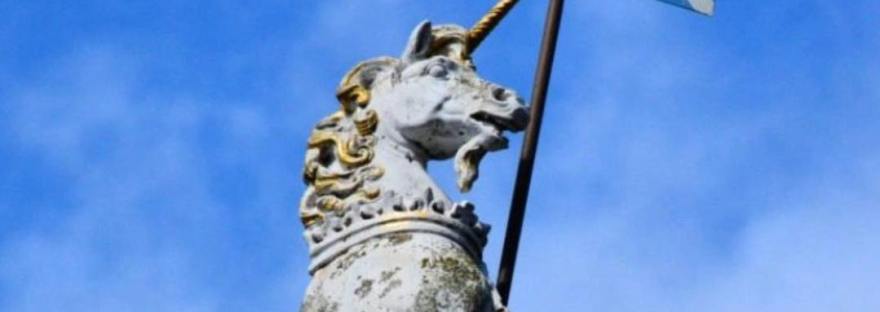
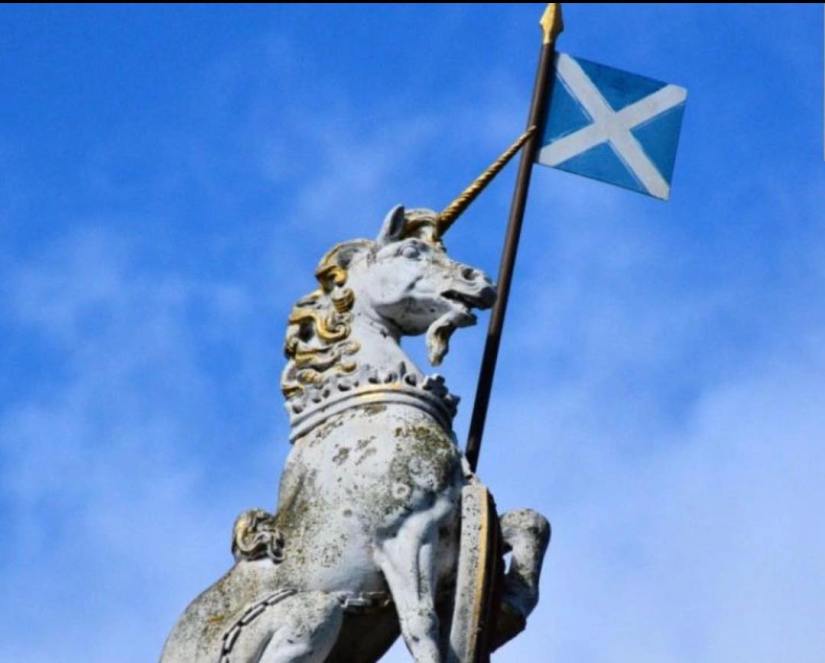
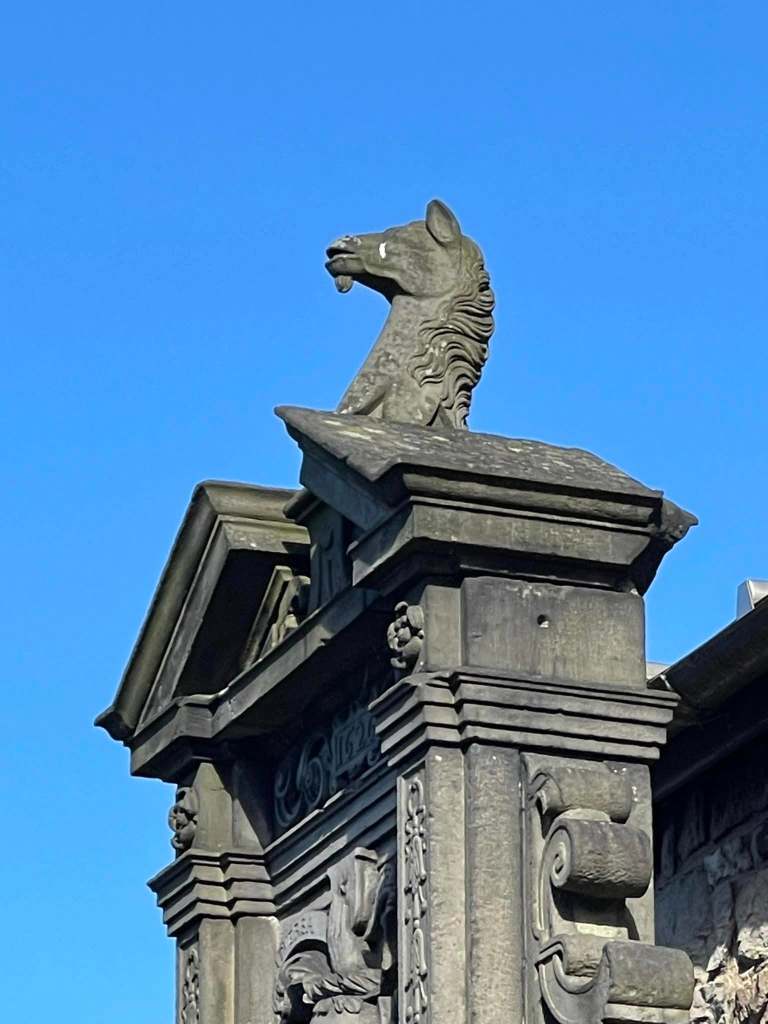
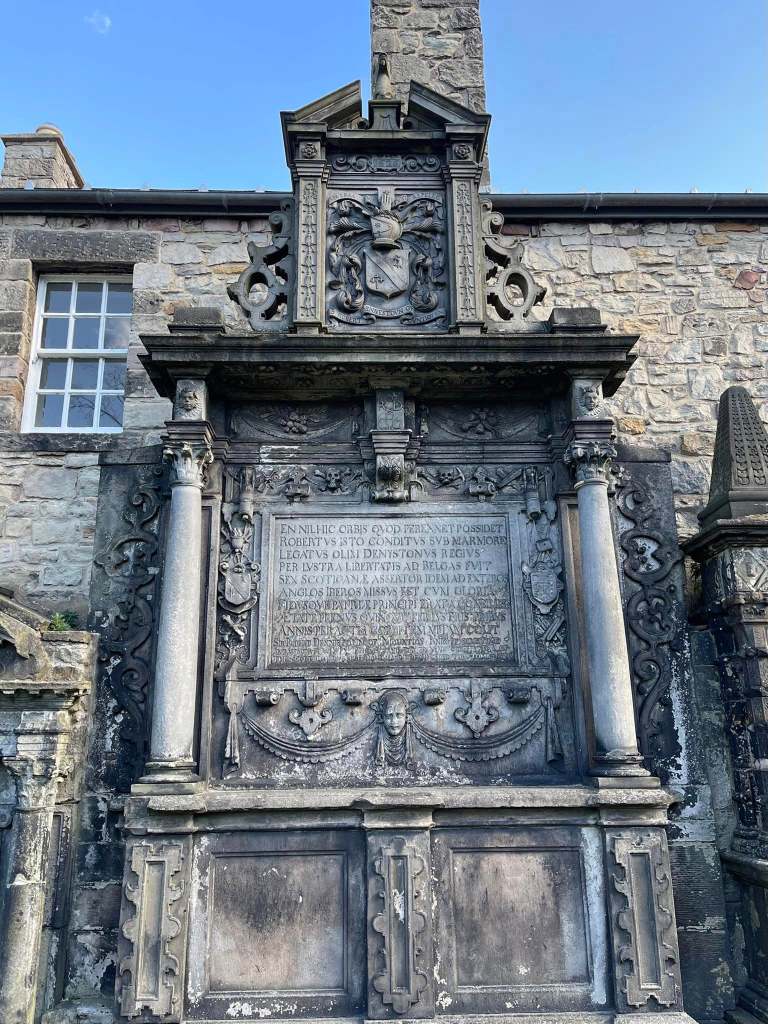
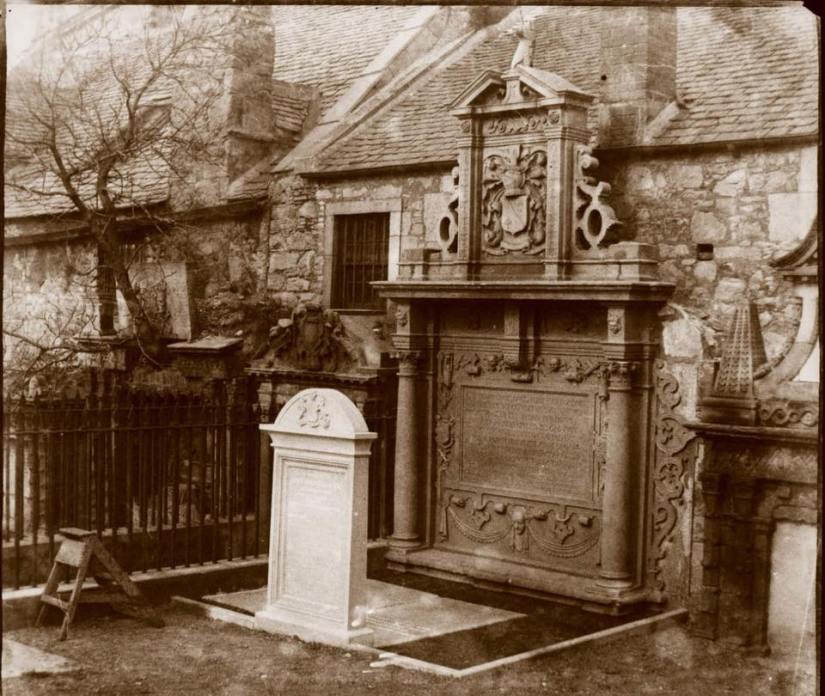
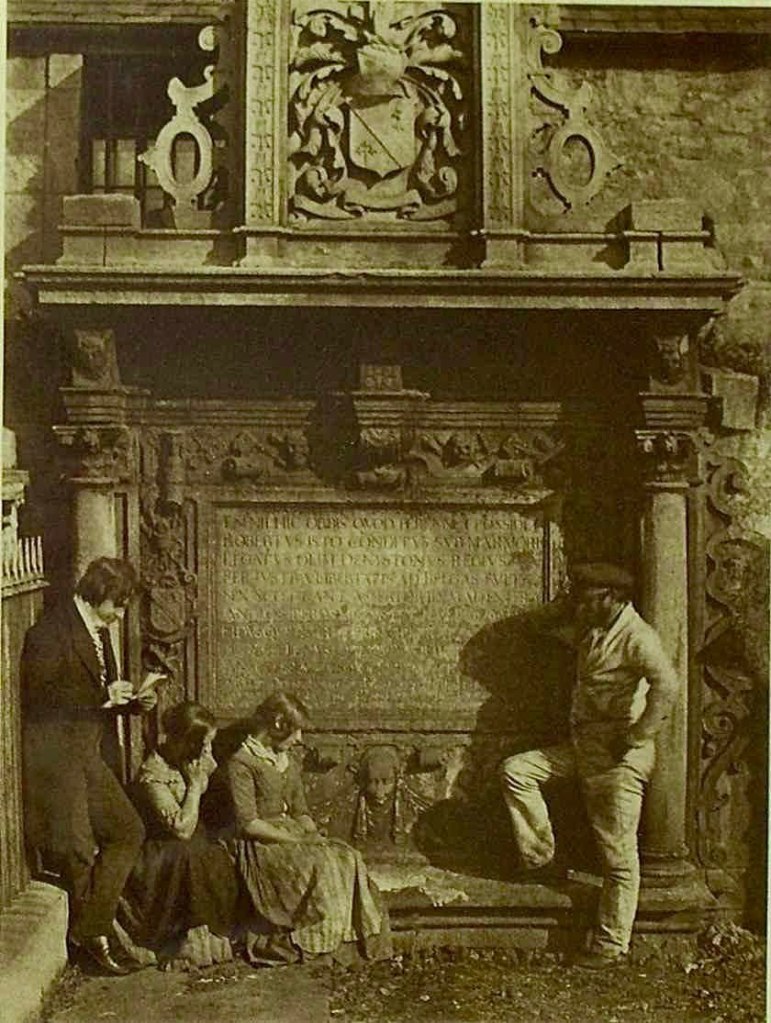
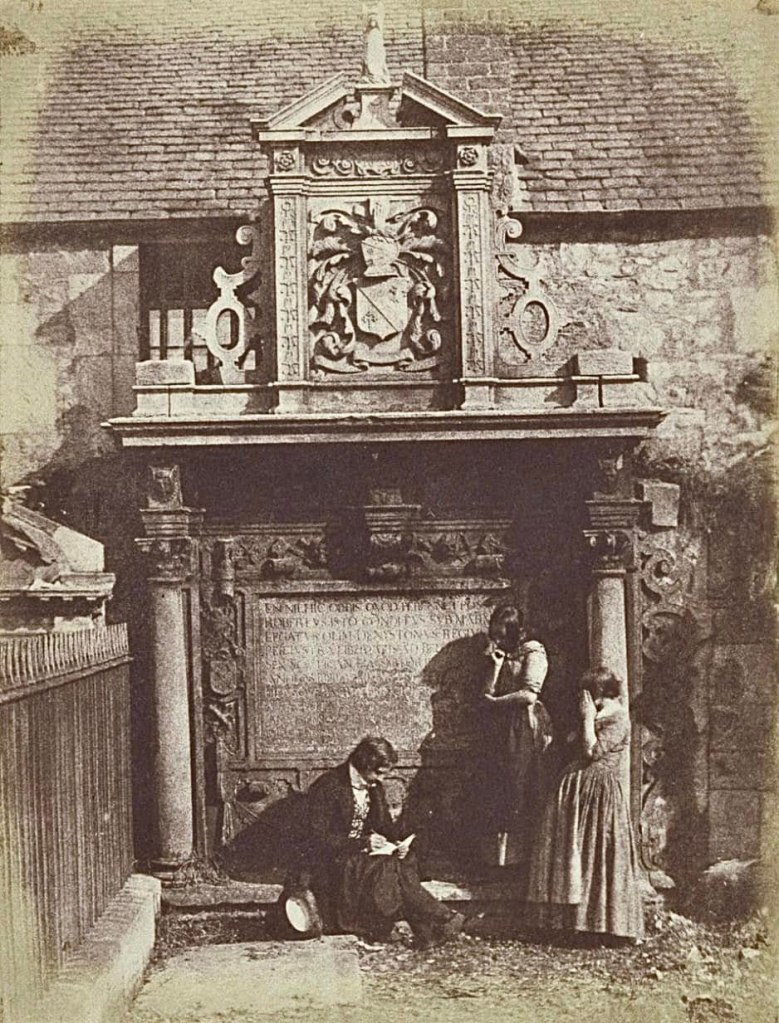
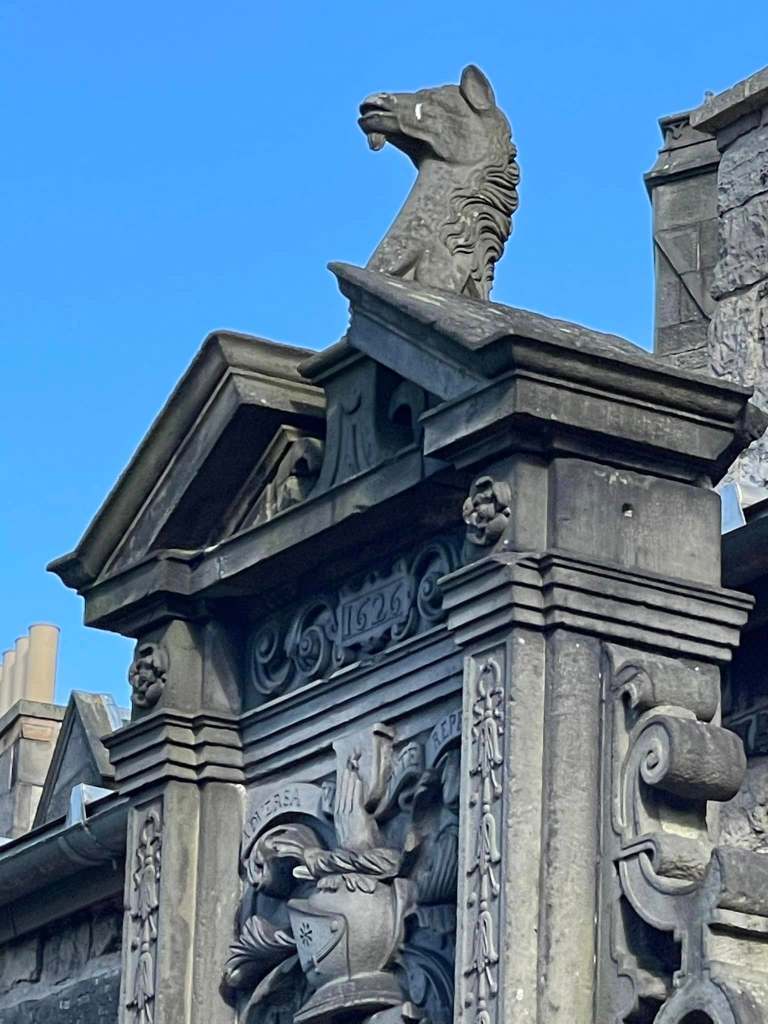
Is it a Unicorn that stands on top of The Dennistoun Memorial at Greyfriars ? Naturally it would have needed a single horn to be a Unicorn, but such a delicate appendage could easily have fallen off since the monument was erected in 1626. Perhaps the beard is a clue as Unicorns are traditionally depicted with a beard. In the 19thC photo there is the suggestion of a horn, but it’s a low resolution image and I may well be seeing things. The Unicorn as the National Animal Emblem of Scotland was very prevalent in the 17thC, appearing on top of Mercat Crosses all over Scotland. The example below is from The High Street Mercat Cross in Edinburgh. Dennistoun was a Scottish Ambassador so may well have been very fond of the Unicorn symbol. What do you think ?
Unicorn, Mercat Cross, EdinburghThe Dennistoun Memorial, Greyfriars Kirkyard, Edinburgh19th Century photo of The Memorial
The Dennistoun Memorial is one of the most eye catching on the East Wall of the Kirkyard. As a result it was a particular favourite of early Edinburgh photographers such as David Octavius Hill and Robert Adamson. The memorial is dated 1626 and when raised it certainly broke new ground on the design of mural monuments at Greyfriars. Before this one, all of the earlier mural monuments are relatively conventional and quite formulaic. But Sir Robert Dennistoun had spent 30 years in Holland absorbing the style and designs that flourished there. He must have brought those ideas and images back to Scotland and used them to heavily influence the style of his own monument. I believe William Wallace was the Master Mason on this work, taking over from John Simpson who had carved the earlier examples on the East Wall between 1610 and 1620 which all are niche tombs with pilasters (where the columns are integrated in the stonework and not separate load bearing columns). This style was a copy of monuments that the wealthy had commissioned inside the Churches of Scotland for a century or more before the Reformation, often with an armour wearing Knight lying in the niche.
William Wallace brought a great deal more grandeur, flair and symbolism to his work than Simpson had done. Wallace was the first to feature magnificent freestanding columns carved from a single separate piece of stone. On the Denniston he carved one column on each side of the monument with great visual impact. Later monuments went one better and chose to arrange such columns in pairs, so having 4 in total on John Byres of Coates, Henryson, Foulis & Bannatyne. All of these monuments adopted the same extensive strap work, flamboyant & provocative symbolism with large winged spirits. These are unquestionably the finest 17th century outdoor monuments in Britain, with Dennistoun and his extensive Dutch influences playing a big part in this.
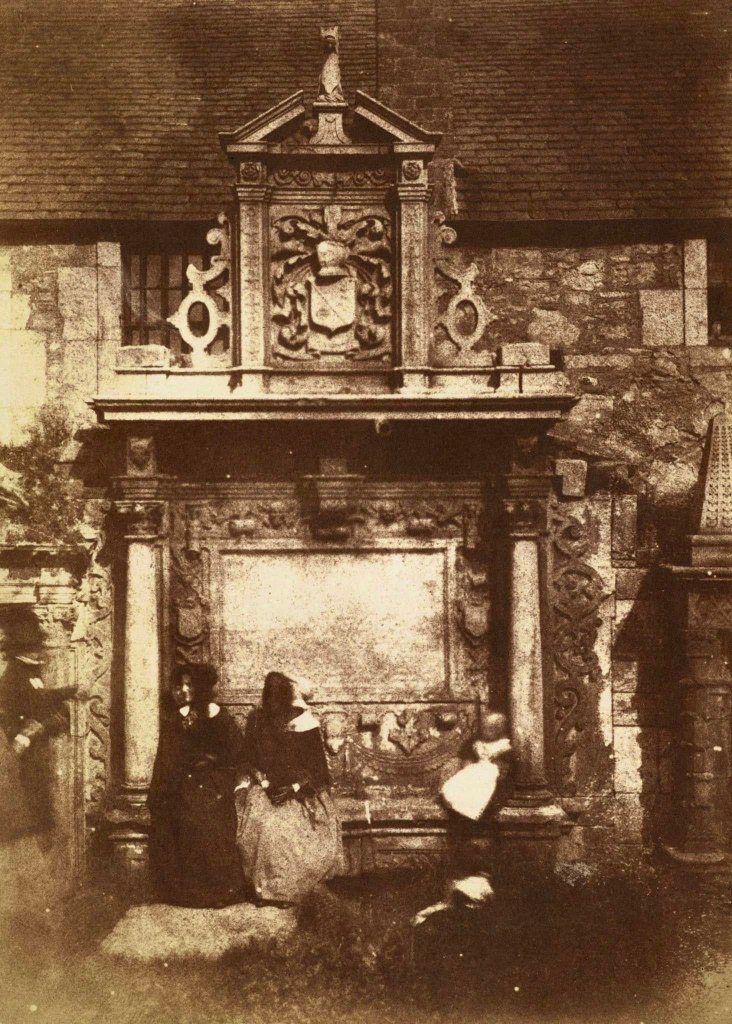
The Dennistoun Memorial 1860
When first installed the Dennistoun Monument was lower to the ground. Sometime in the later 19thC the monument and others adjacent to it were raised up by adding a higher base layer. This increased their grandeur to be on a par with those on the west wall and made it less easy for people to sit on them like appears on this photograph from 1860.
That young child to the right & the faceless woman to the left are a bit disconcerting.
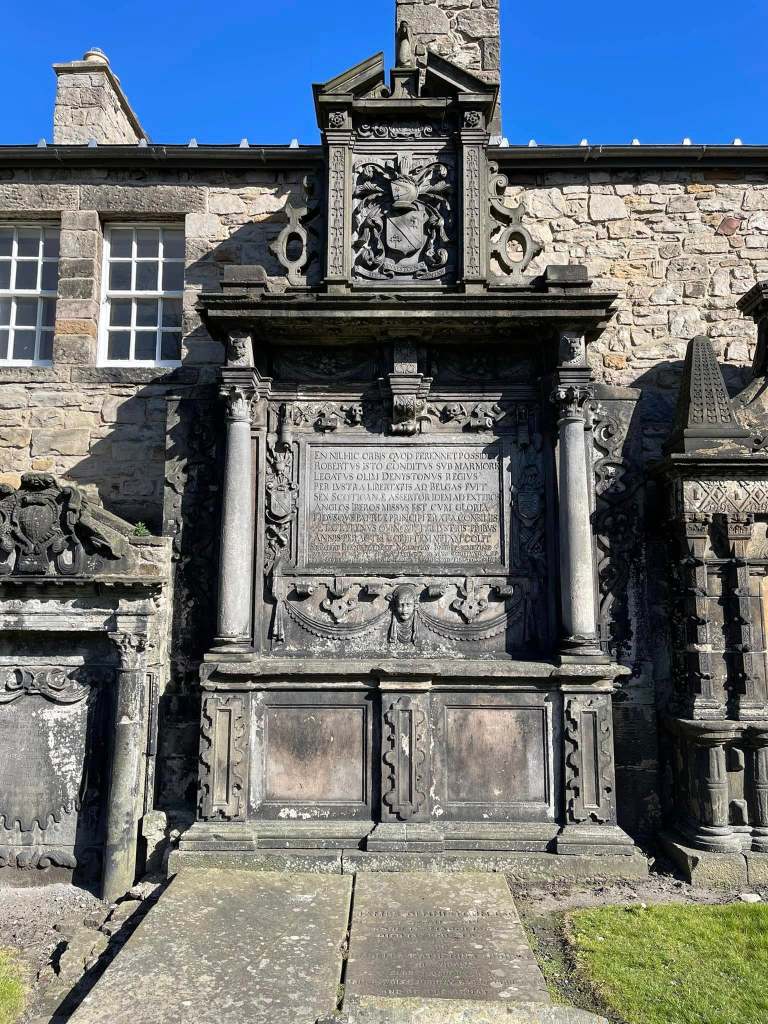
You can see here how the base platform has been added which doesn’t appear on the earlier black & white photos taken in the mid 19th century.
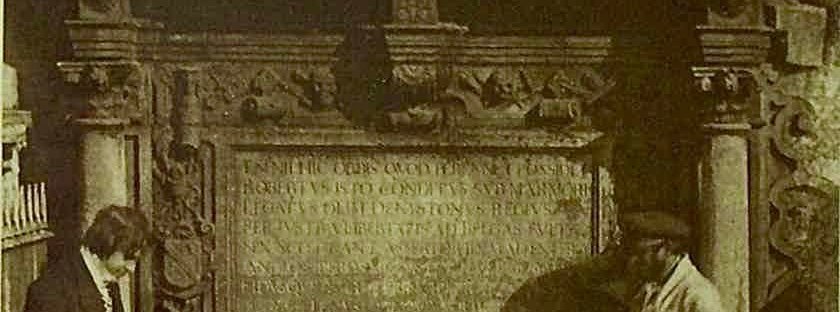
This image features David Octavius Hill & his nieces.
This shows how Denniston stands out from the slightly earlier monuments to each side. They lack the monolithic columns and extravagant symbolism that are so powerfully deployed by William Wallace on Denniston.
The grand heraldic tympanum complete with horse’s head on top of Dennistoun.
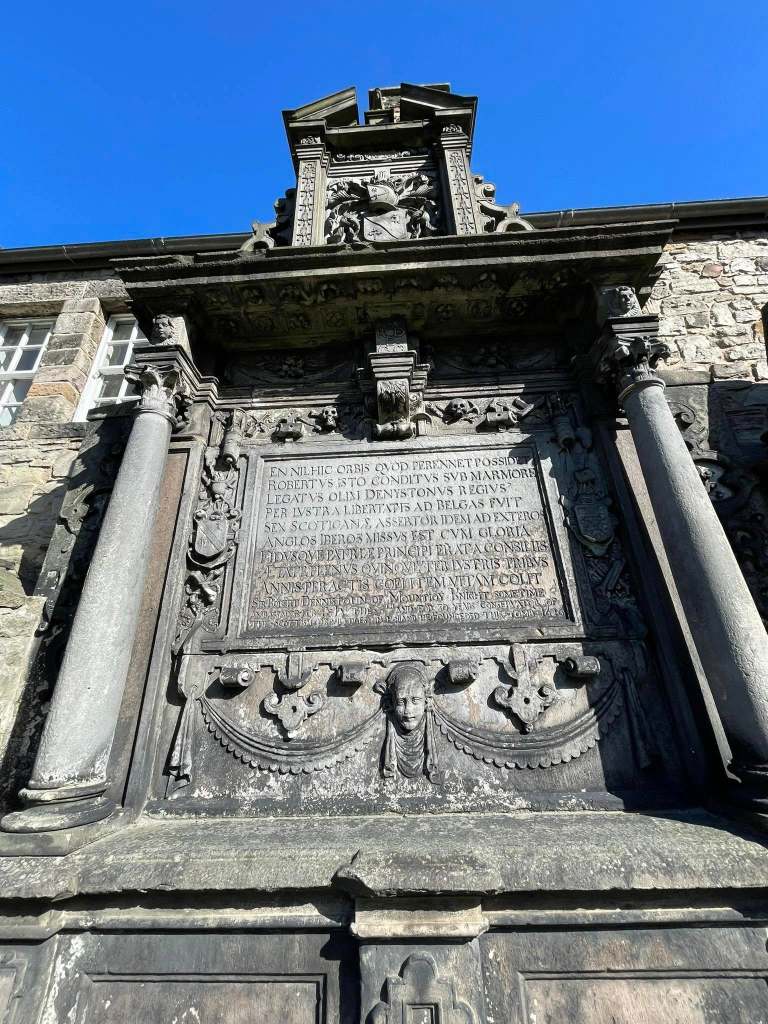
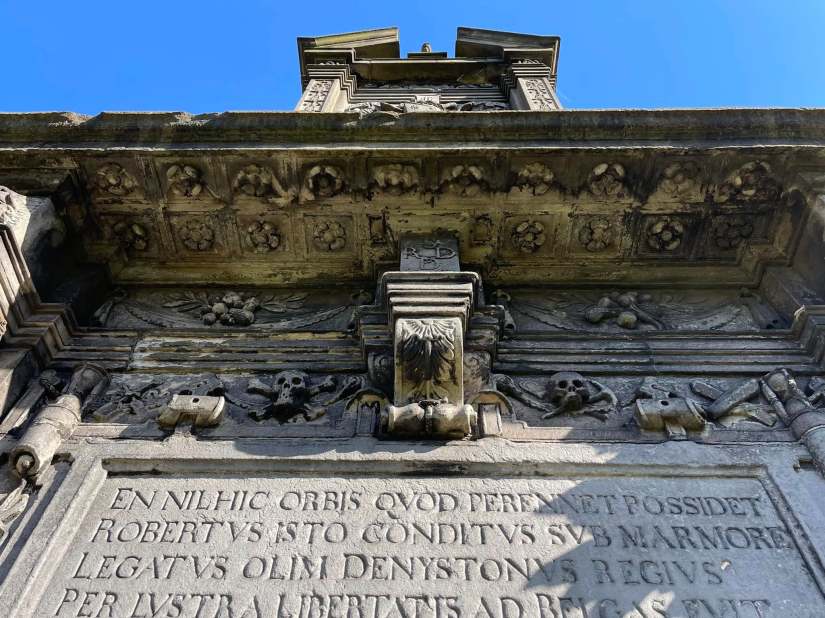
The inscription tells us that “the world possesses nothing permanent”. The symbolism on show here is far greater and more powerful than those on the earlier monuments on the east wall.
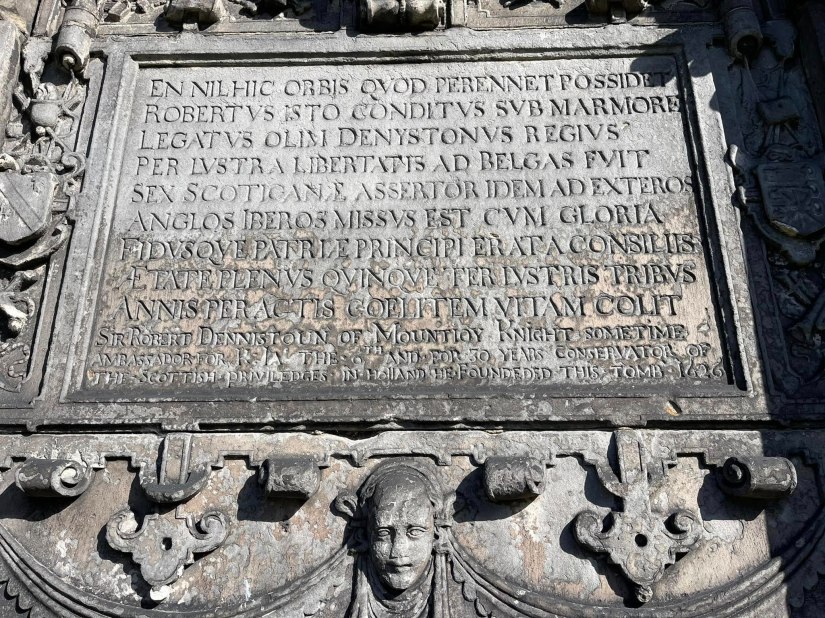
The inscription tells us in English that Sir Robert Dennistoun spent 30 years in Holland.
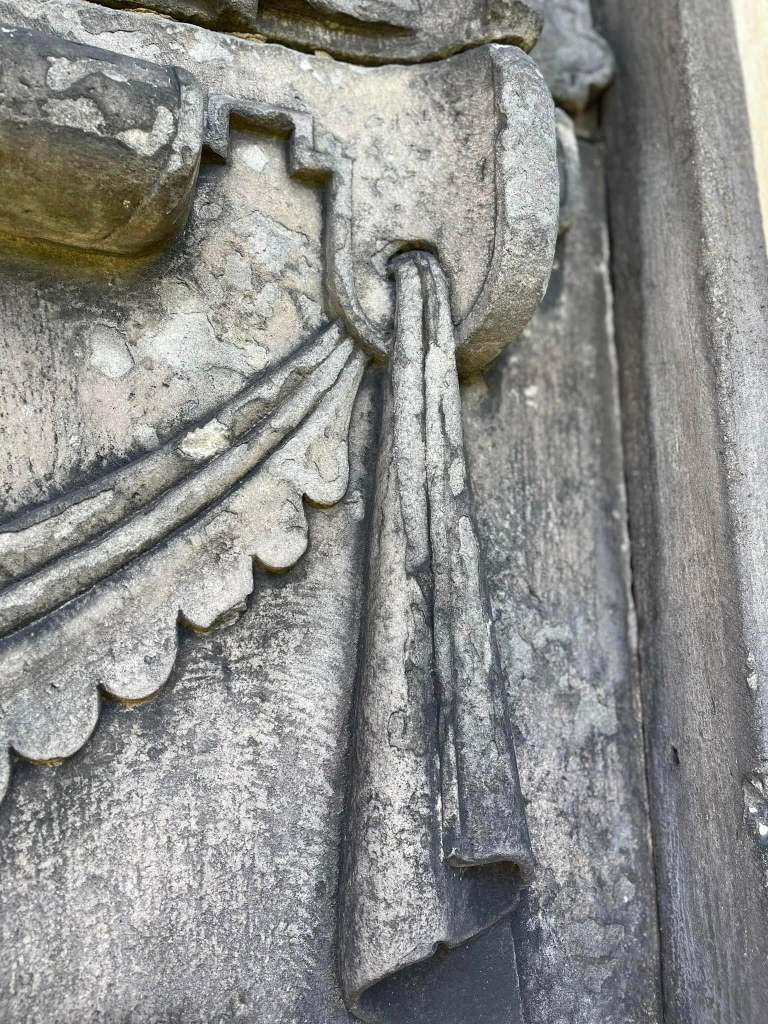
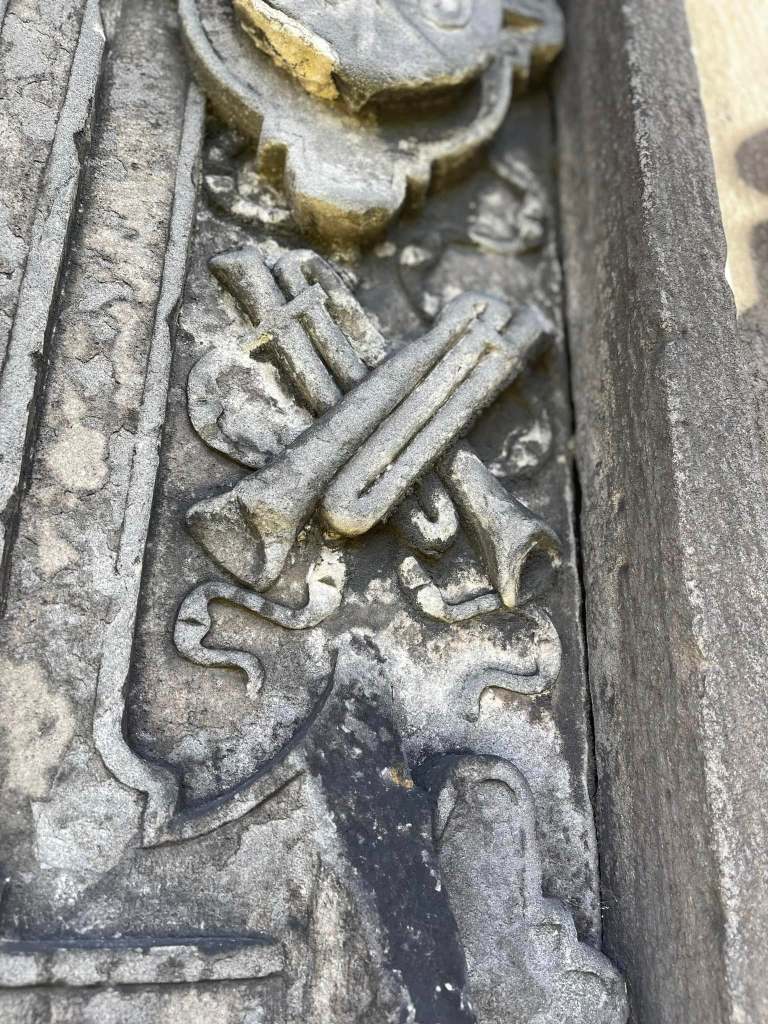
Exquisite detailing showing the skills of the Master Mason.
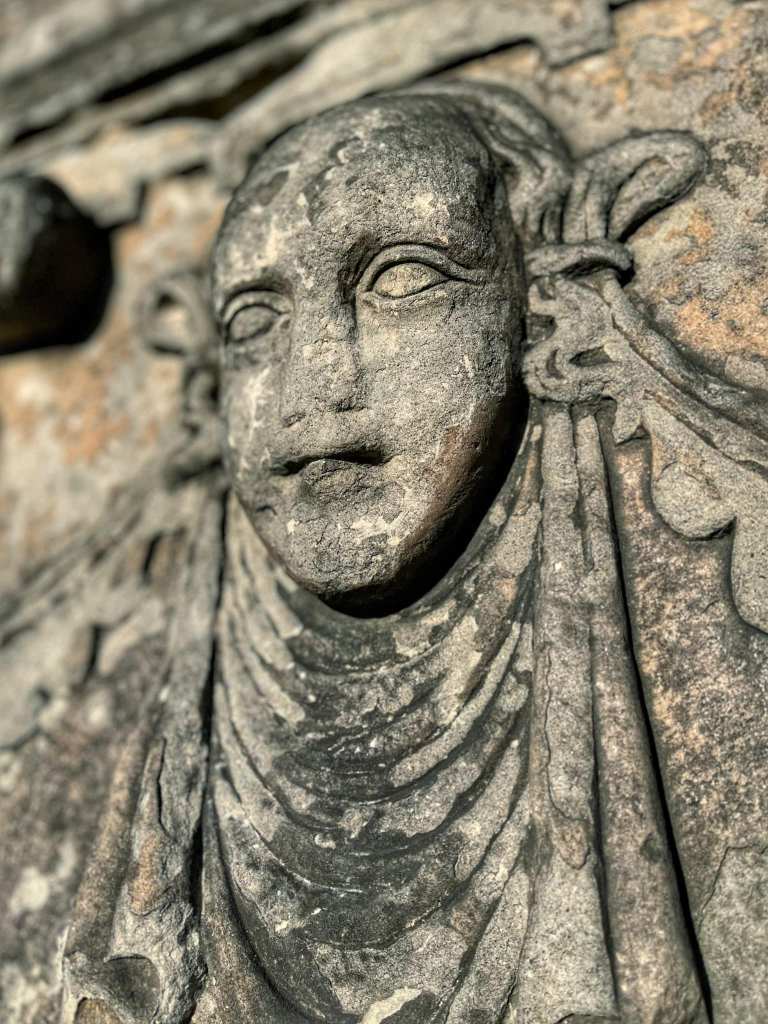
This is a particularly enduring & enigmatic figure on the Dennistoun.


 Friends of Greyfriars Kirkyard