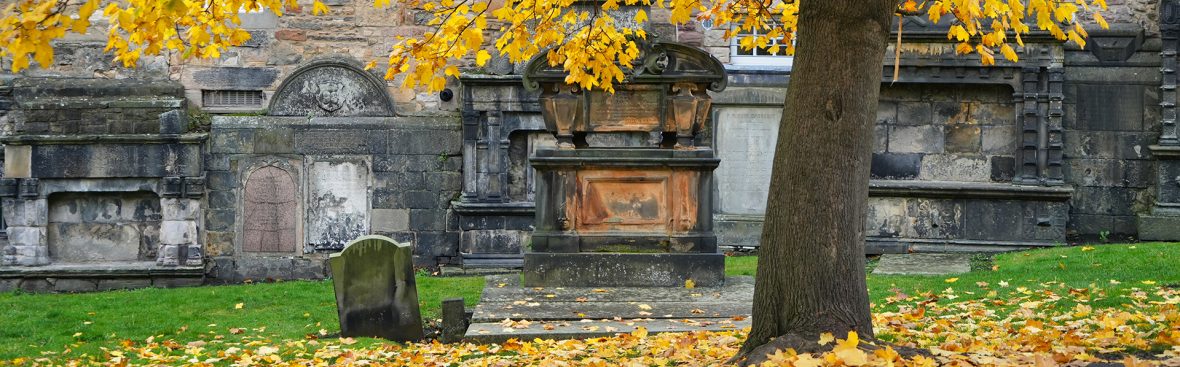
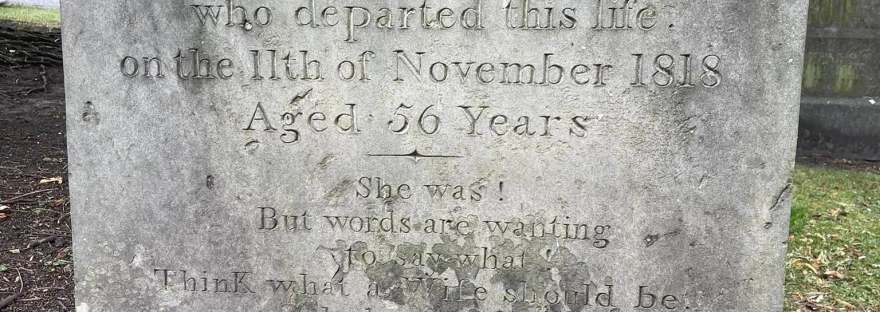
Every gravestone tells a story & gives us a glimpse of lives past. How people lived, how they made their living, the society they lived in & how they died. Maybe some clues as to their personality, their hopes & fears, their beliefs & values. These are 5 quite random gravestones that caught my eye in Greyfriars today. Non have the eye catching symbolism, scale or sophistication of the large mural monuments. They are all 19th century examples, by which time headstones were simpler, narrative heavy, symbolism light designs. So why did each of these catch my eye and cause me to pause for thought ? The answers are on the caption of each of the images.
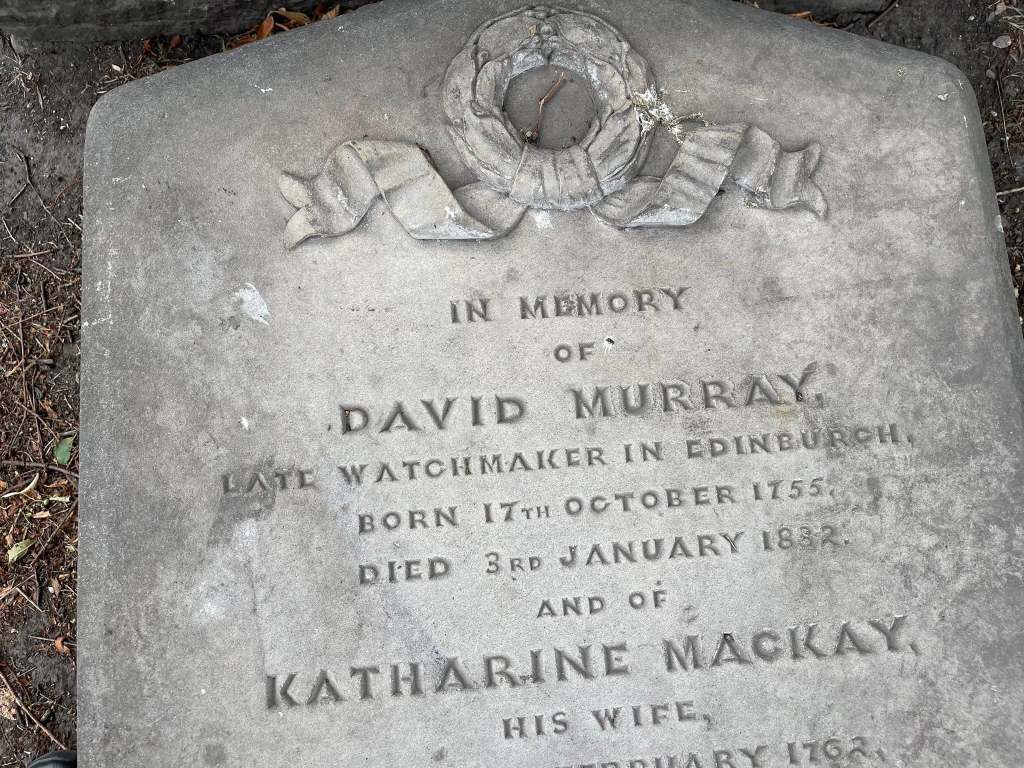
Ok, so obviously Watchmakers can’t live forever. But maybe not ideal to describe one as a “Late Watchmaker”, as that made me think he may not have been that good at making reliable time keeping instruments ;o)
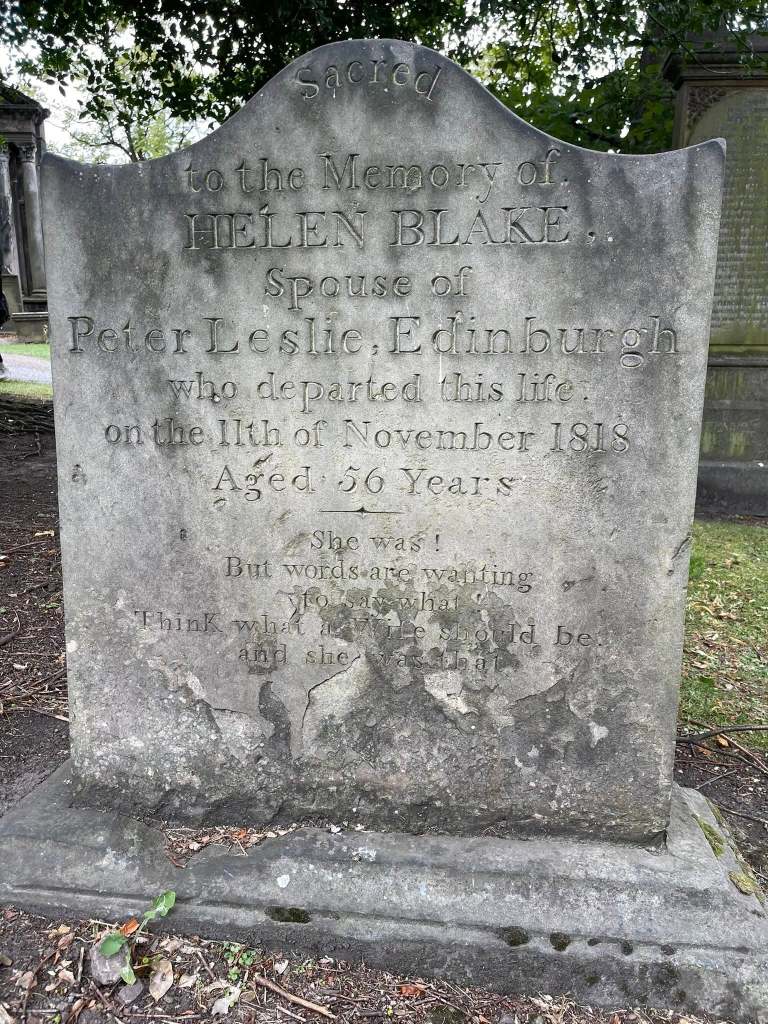
The epitaph here caught my attention. I am well used to reading long winded, gushing epitaphs that take great pains to describe the extraordinary virtues of the deceased. But here the epitaph for Helen Blake, written by her Husband, Peter Leslie, has been reduced to the following :
SHE WAS !
BUT WORDS ARE WANTING
TO SAY WHAT
THINK WHAT A WIFE SHOULD BE
AND SHE WAS THAT
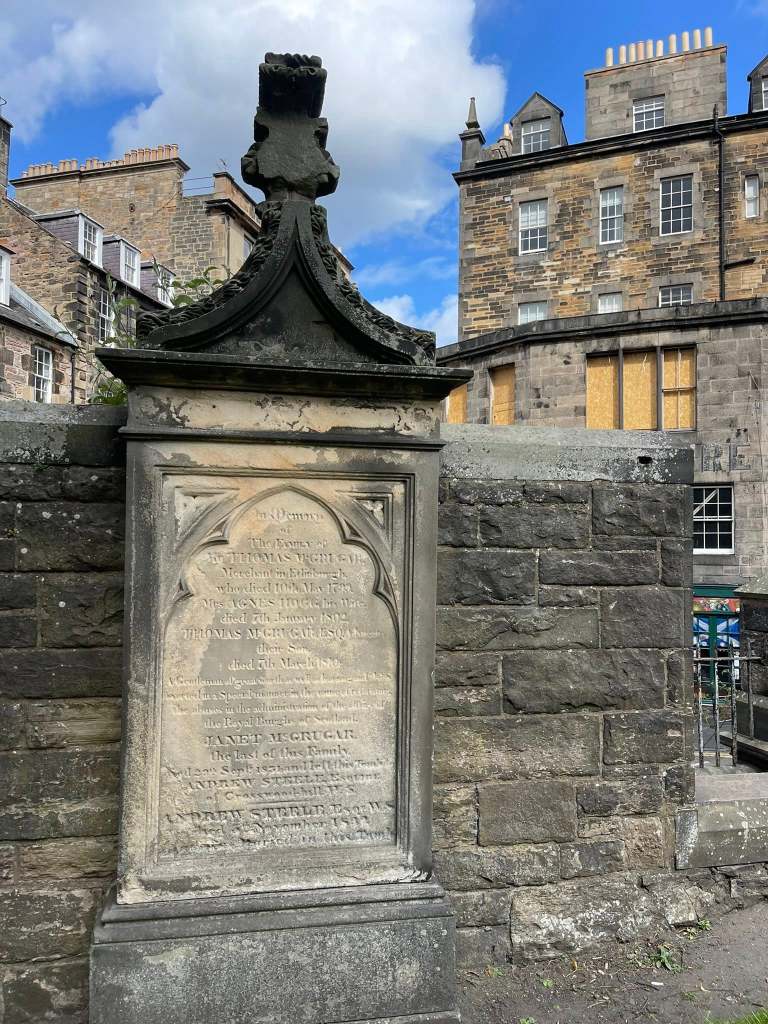
The boarded up windows in the background are the back rooms of The Elephant House cafe where JK Rowling sat writing Harry Potter. If she did visit the Kirkyard looking for suitable names for her characters, maybe she should have spotted and used this one. McGrugar surely would have made a good name for a Professor of Magic ;o)
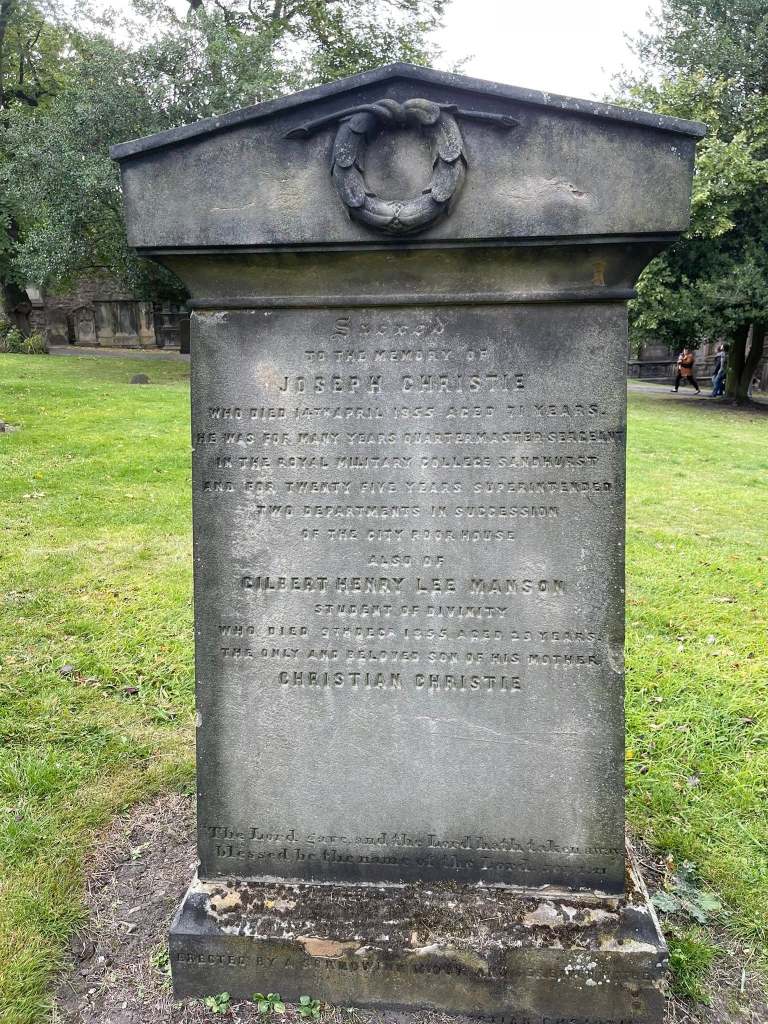
Joseph Christie started his career as Quartermaster Sergeant at the Royal Military College at Sandhurst. He then spent 25 years as the superintendent of the City Poor House, which was adjacent to Greyfriars.

William Coulter was a Soldier who served two campaigns in Portugal, “gaining the esteem of his equals and the confidence of his superiors”. Sadly he fell at the Battle of Albuera in 1811 aged only 21, “bequeathing to his afflicted parents the sweet consolation that he was worthy of his Country”. The Battle of Albuera took place on May 16, 1811, near the Spanish village of Albuera, not in Portugal. It was a major clash during the Peninsular War, involving British, Spanish and Portuguese forces standing together against the French. The battle was known for its fierce fighting and high casualties, particularly among the ranks of the British infantry.

 Friends of Greyfriars Kirkyard