

Foulis Memorial
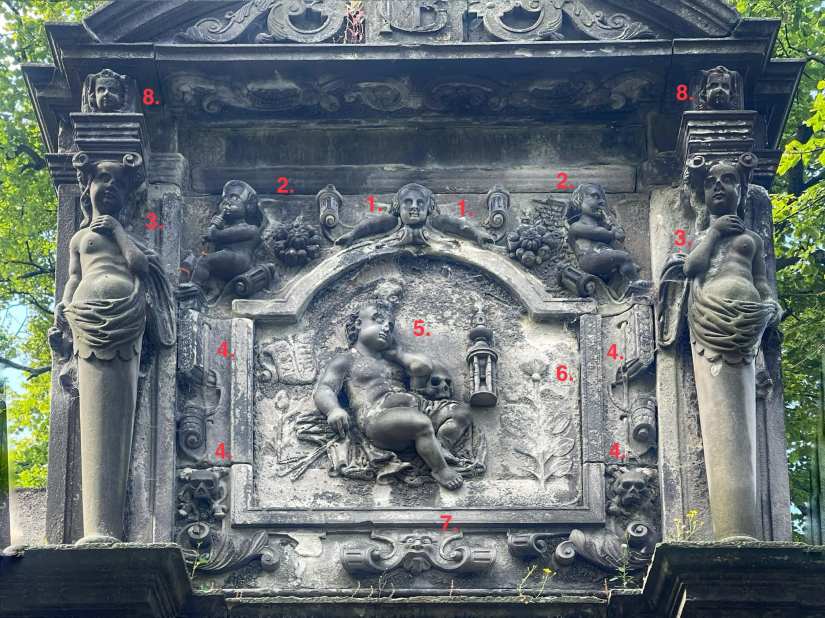
The upper section of the Foulis Memorial is so high above ground level that it is difficult to fully see and appreciate the intricate artistry and symbolism that resides here. A few unusual elements that must have been a stern test of the stonemasons’ skills include :
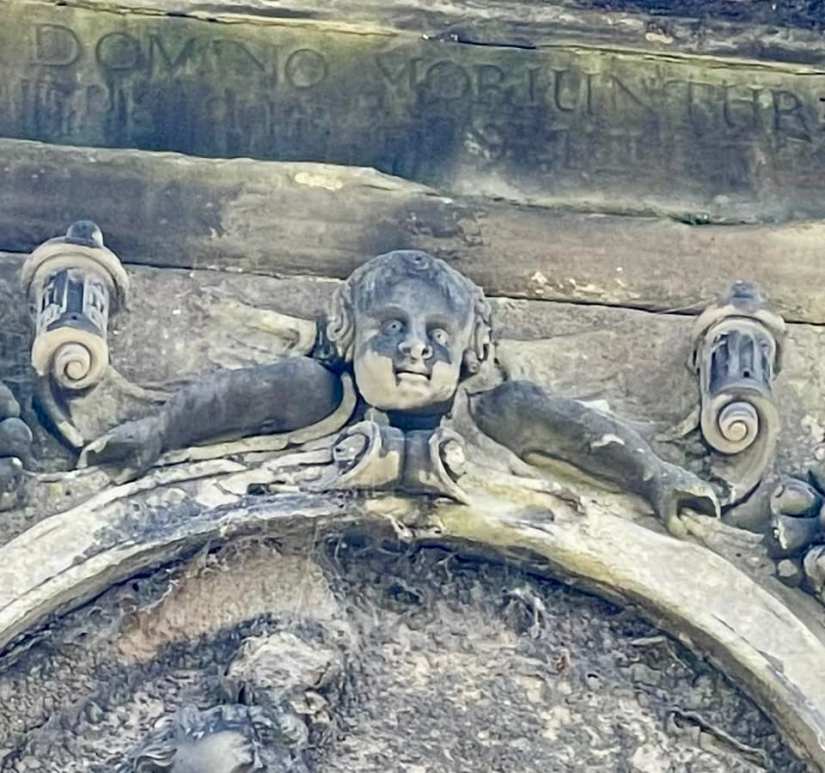
- The cherub’s arms & hands are holding the frame of the scene below.
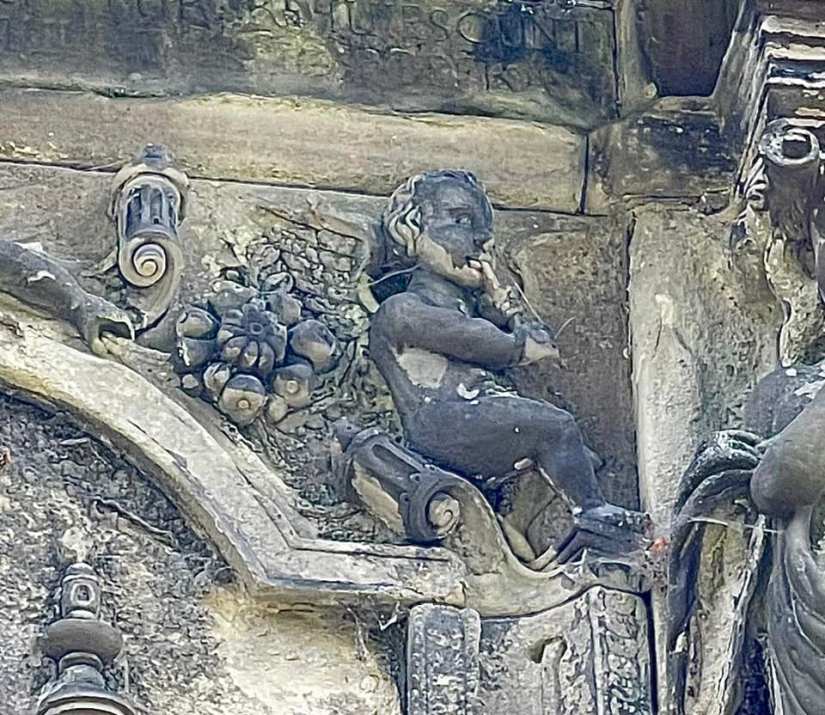
- A pair of winged cherubs are blowing trumpets of resurrection. They symbolise that the dead will arise.
- Pregnant female figures (in the form of caryatids) stand either side, naked from the waist up. They symbolise that the dead will be reborn.
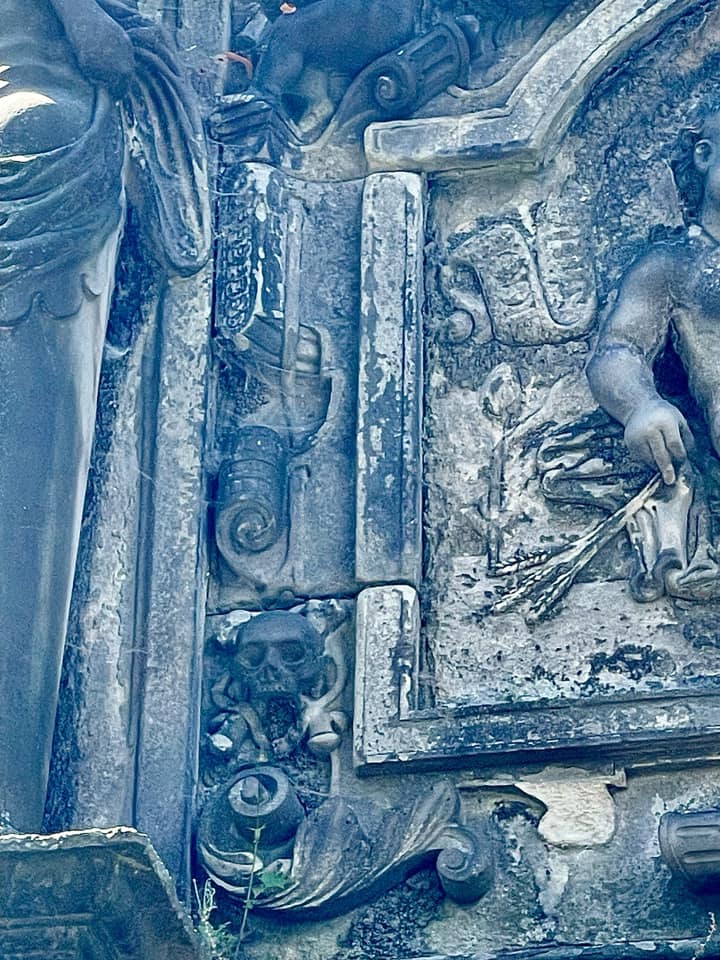
- The skull & cross bones are tethered by ornate ropes which are threaded through the frame. This must have been exceedingly difficult to carve. These symbolise that we all will die and our mortal remains and possessions will remain on earth whilst our soul ascends to heaven.
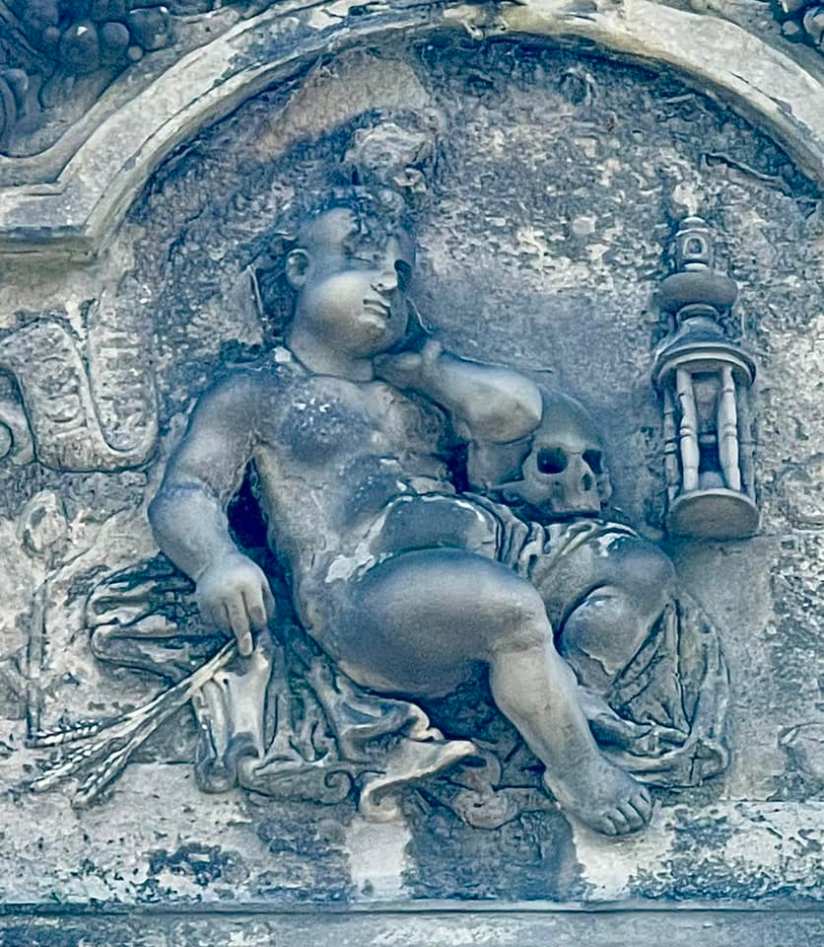
- The large central cherub is shown in a relaxed contemplative pose, surrounded by symbols of death (skull & hour glass) and resurrection (flowers, foliage & crops)
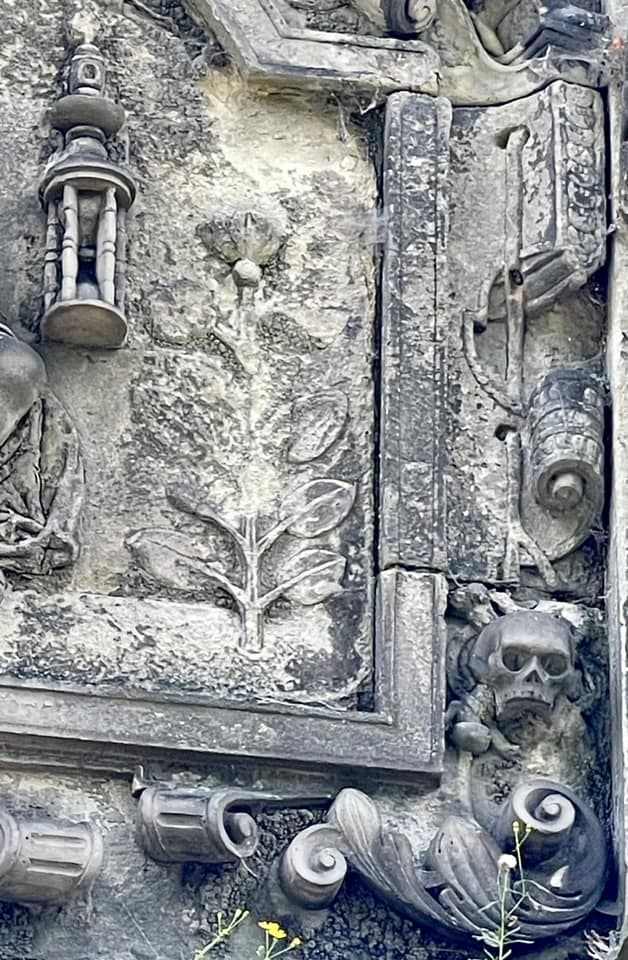
- The large flower symbolises the beauty and vulnerability of life, as well as the power to be reborn after death.
- A “green man” hides in plain sight on the lower border. The face is covered in foliage, symbolising new life growing after and out of death.
- The winged heads symbolise the soul of the deceased ascending to heaven.
The whole Foulis memorial is a tour de force of the art of the stonemasons. No expense has been spared, no corners cut and no technical challenge was regarded as too great. The Foulis family did not achieve fame by playing an enduring role in the big social, political, military, religious, economic or scientific events of their day. They simply earned a fortune, mostly from money lending. Yet this memorial has earned them an enduring fame as we still discuss them today. The cost of this memorial must surely make it one of the most expensive of any we find in burial grounds in the whole of Scotland dating to the 17th or 18th centuries. But we can confidently conclude that the Foulis family received good value for money as by spending big, their name lives on, which is what a memorial seeks to achieve. George Heriot, another major money lender of the same period and a relative of the Foulis family, achieved the same result. But not by financing a big memorial above his burial place (which is at St Martin-in-the-Fields in London) but by leaving much of his fortune to establish Heriots School and Heriot Watt University. Those endowments amounted to over £25,000 (equivalent to £25 million today). The Foulis family will have spent a fraction of that amount on this memorial, but I estimate it will have cost up to £500 (or £500,000 in today’s terms).
1 Winged cherub framing scene
This is the winged cherub whose arms appear to be holding the whole upper central scene. It is a most unusual pose, that must have been difficult to carve and could easily be overlooked. But once you see it, it is a detail that adds interest and impresses us further. The facial features are brilliantly carved giving the figure a personality & warm quality.
2 Winged cherubs with trumpets
This is one of the pair of winged cherubs (angels) blowing trumpets of resurrection, pointing down towards the ground in which the dead are buried. They, like all of the Cherubs on this monument, have a very life like appearance, with a particularly well carved mouth, nose & eyes. They seem to display a deliberately warm & friendly character. The floral, fruity display behind them is further reinforcing the resurrection/ new life after death message.
3 Caryatids
The pregnant & naked female figures forming the columns either side of this upper panel. These are Caryatids, a classical architectural device found on Ancient Greek buildings. This is a deliberate effort to evoke classical art, demonstrating the sophistication and education of the family. The figures are here to symbolise the power to bring forward new life. They are supporting their heads by holding their necks.

4 Skull & crossbones
The skull & cross bones is the most prevalent mortality symbol, serving to remind viewers to prepare for their inevitable death by living a good Christian lifestyle. The message is often reinforced by tethering the symbol with a rope or ribbon, symbolising that earthly assets and matters are of no value to us after death. A big effort has been made here to show the tether which is shown threaded through the structure to emphasis how securely bound it is. At the ends of the tether are decorative tassels that add weight.
5 Central cherub
The central Cherub is shown, eyes closed to empathise its contemplative nature. It rests casually on a large skull, beside a brilliantly carved hourglass which has a flaming torch on top. The message is to contemplate death, the time of which will inevitably arrive, without any suggestion that these people fear death. This is designed to tell us that they are fully confident of their resurrection and admission to heaven so death holds no concerns, indeed death is the gateway to a new blissful life in heaven.
6 Flower
The large flower with leafy stem symbolises the frail, temporary beauty of life and the ability for life to go on after death (like flowers can die back in the autumn but grow up again in the spring). The carving of this element is less pronounced than the rest of the scene so sadly it has faded somewhat, compared to the still vibrant carvings that surround it.

 Friends of Greyfriars Kirkyard